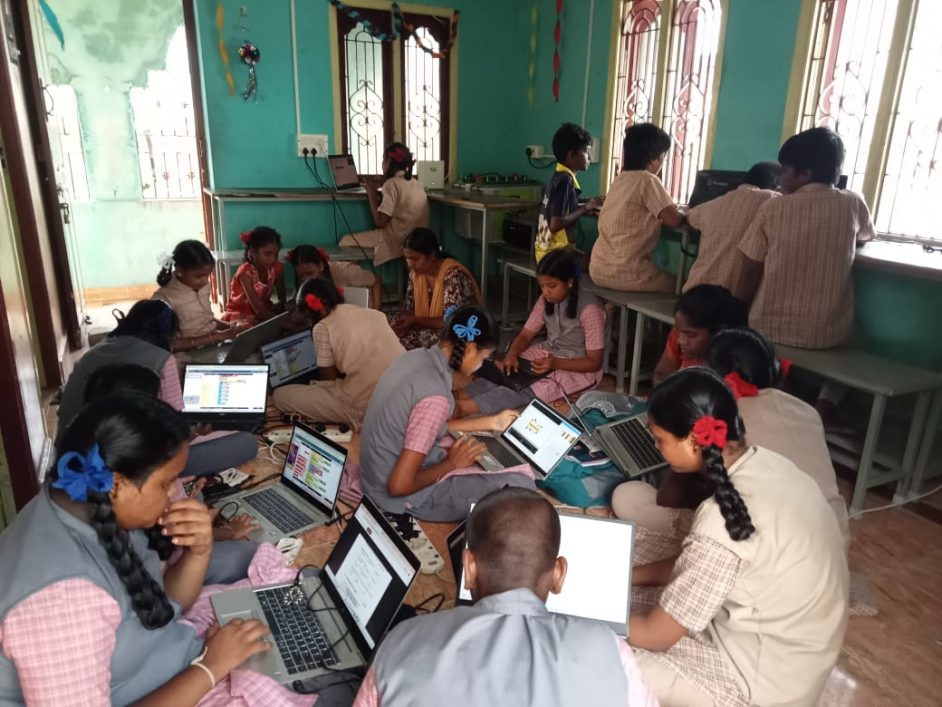
Asha has been running 13 RTCs in partnership with IITM Pravartak. Here is a report on their operations and various innovations that have been brought in in their functioning in the last year.
Sept 2025 by Rajaraman Krishnan
IITM Pravartak and Asha launched the first two Rural Technology Centers (RTCs) in January 2022. Several more have been started including our latest one in the village of Kottur in Thiruvarur District. Currently we are running 13 RTCs.
The RTC website talks about the rationale behind establishing these RTCs. This report will update and take further what has been explained in the following older reports.
- RTC Status report from June 2024 gives the details of each of the RTCs as of June 2024.
- RTC Status report from Aug 2023 explains some of the basic operational choices of the RTCs.
- RTC Impact Assessment Report from Aug 2024 talks about how we are measuring Impact at the RTCs.
RTCs and Enrollment
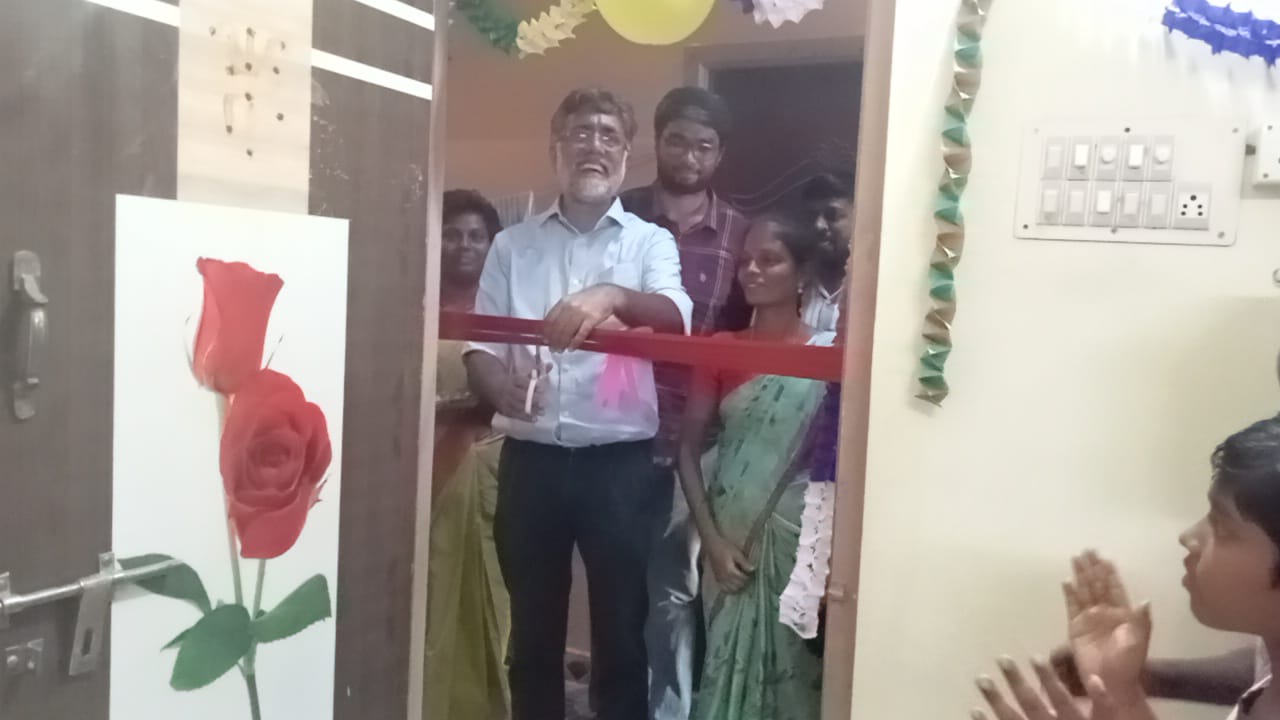
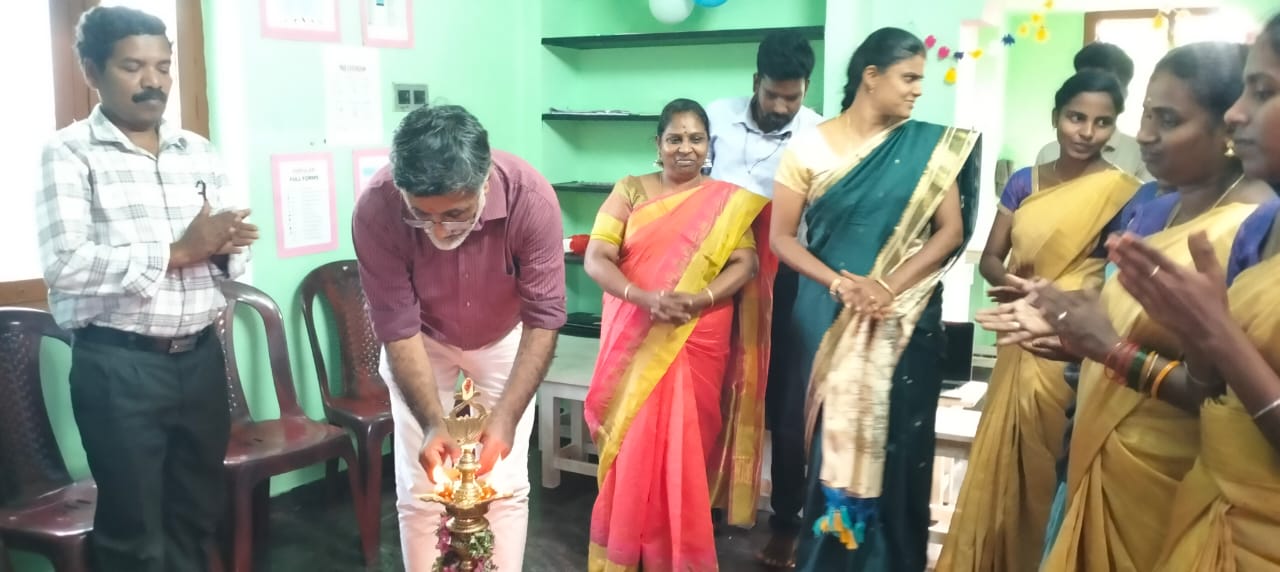
Three new RTCs were started for the Feb 2025 to July 2025 term. These were started in Feb 2025 at Thirutani, Thirupatchur and Uthukottai, all in Thiruvallur district. Here a report on the inauguration of these RTCS. Another RTC was started at Kottur in Thiruvarur district in July 2025.
With this there are now a total of 13 RTCs. Here are two charts that show the number of RTCs and total number of students enrolled at the RTCs over the various terms.
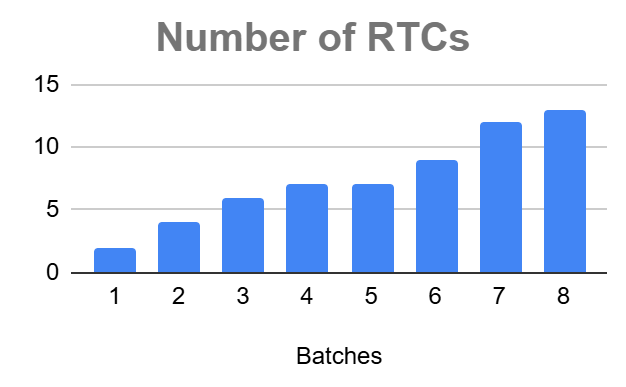
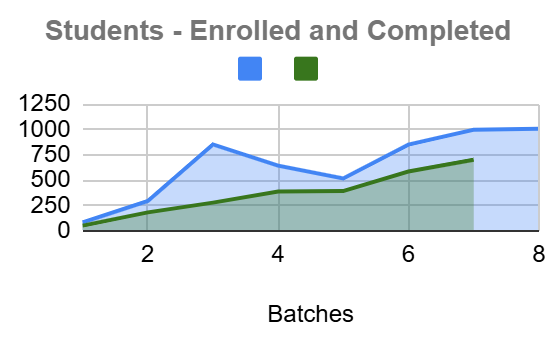
Note that the 3rd and 4th batches were a little anomalous. The RTCs at Kayathar and Kalugumalai, being small towns, saw very large number of students enrolling but many of them were not serious about learning the courses and therefore dropped out. We are maintaining a completion ratio of about 70% in the last few terms and our aim with the more mature RTCs is to increase the completion percentage to about 80%.
Here are the number of students who completed various courses organized by the courses.
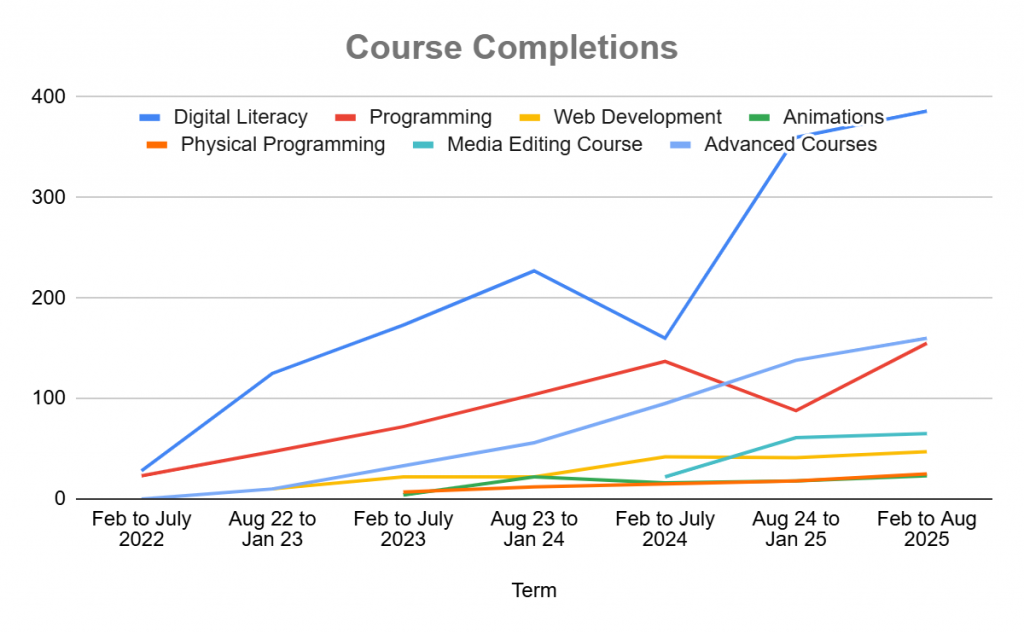
Note that Advanced Courses include all courses other than Digital Literacy and Programming.
Innovations at the RTCs
The status report from Aug 2023 and our RTC webpage explain the basic aspects of our RTC operations.
- Centre paired with one or two high/higher secondary schools close to the centre. Basic CS education at the schools and advanced courses at the centres.
- One or two teacher RTCs depending on the number of students enrolling. We expect 60 students to enroll at 1-teacher RTCs and we expect an enrollment of 100 students.
- RTC operates in 1.5 hour sessions which can be combined to form 3 hour sessions. Each student typically comes for 2 1.5 hour sessions a week.
- Six-month terms – Feb to July and Aug to Jan. One or 1.5 months will be holidays. Each course at the RTC will require 25 to 30 lessons each of which will can be completed in one 1.5 hour session. Therefore these will take about 3 to 3.5 months of the term. The remaining part will be used for project work, assessment etc.
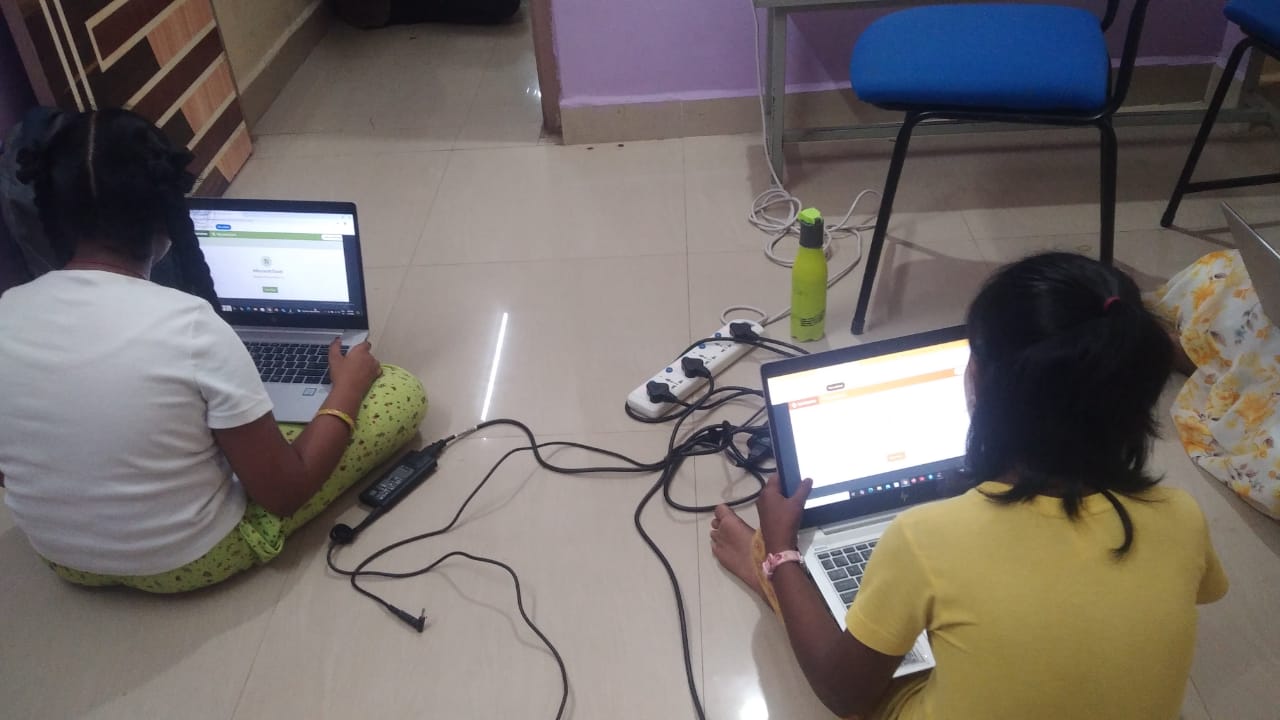
- Centres are equipped with about 10 to 20 computers (mostly laptops), have a broadband Internet connection, and most of them have UPS power backup as well.
- RTC Impressions at the end of the term showcases the best projects in every course over the term and acts as a motivator for the students and teachers to produce their best effort.
- Our own assessment is conducted to check if the students have learnt all the things taught in the course. A baseline/endline assessment using NorthStar’s toolkit (skills tested is quite orthogonal to what we teach) is conducted to measure how much the students have progressed through the course.
While these remain the same, here are some changes that are happening.
Infrastructure at the RTCs
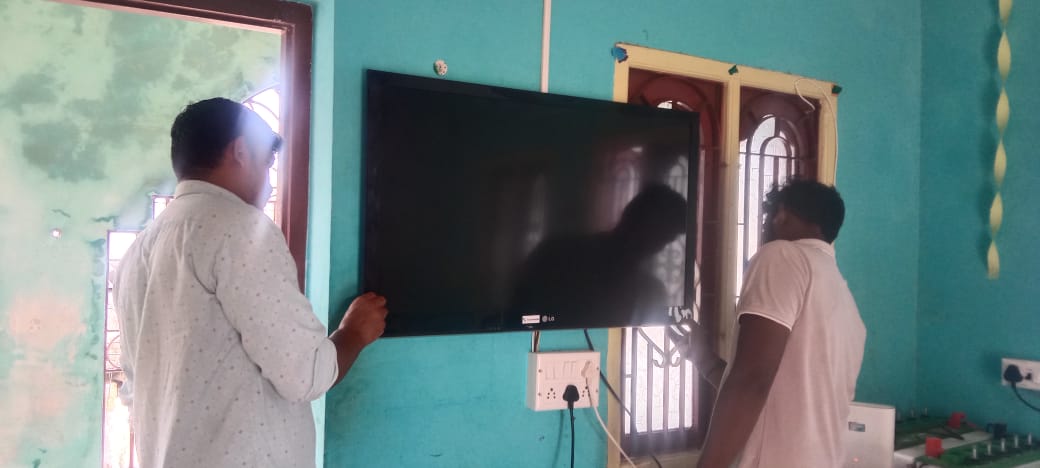
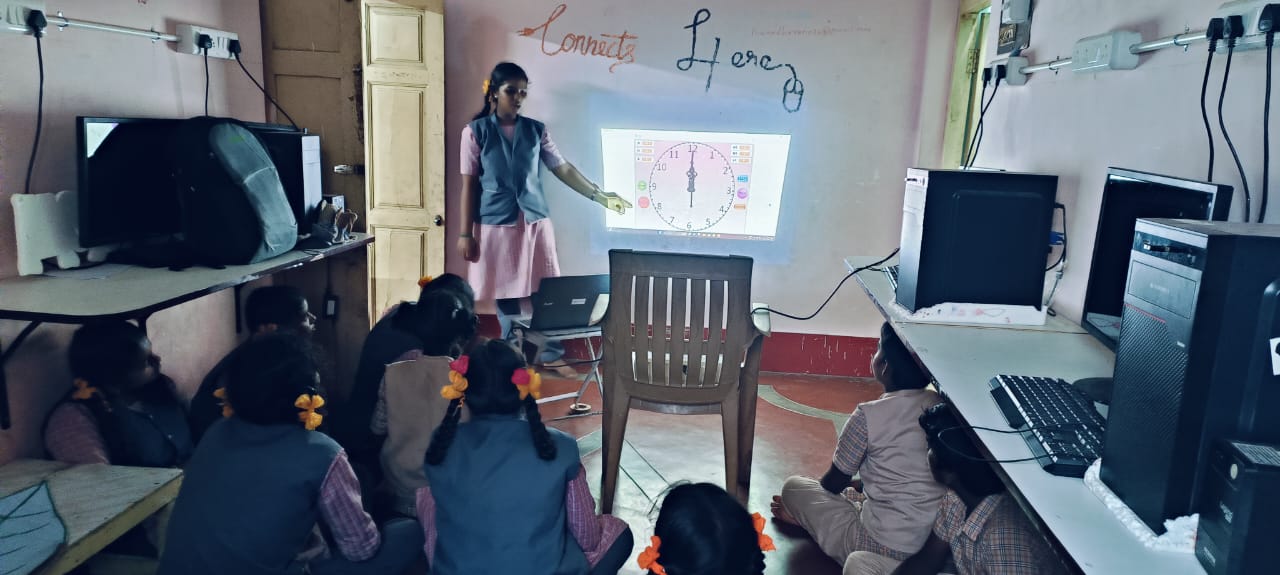
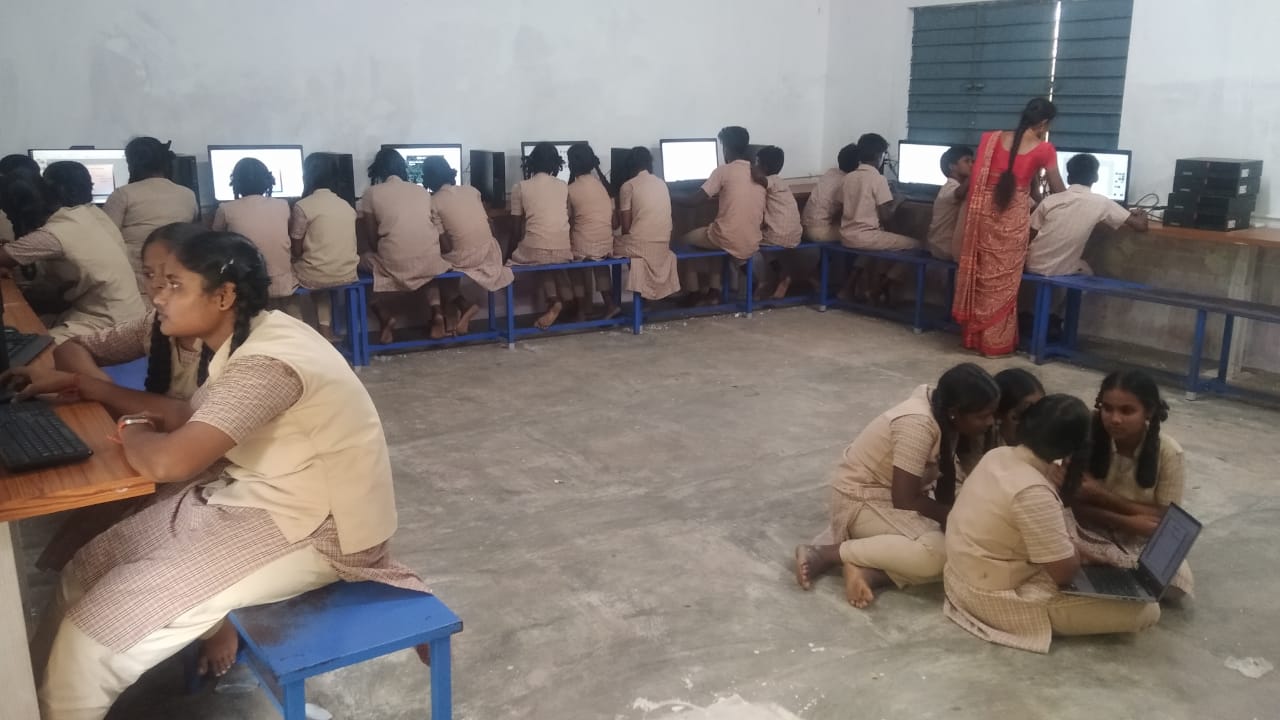
With laptop donations from Amazon, all our RTCs are well equipped with computers these days. In some of the RTCs we have been able to add a printer. Most of the RTCs have also gotten either a projector or a big screen TV. While a Smart Class system would have been ideal, teachers can now teach a class connecting their laptops to either the TV or the projector.
We have also always viewed the RTCs as digital resource centers for students to come experience technology. Towards this end, we are also looking at purchasing some 3D printers and drones that will be made available to the RTCs that the children can play with. The 3D printers can also be used in our new Robotics course. Drones with camera can be used in our media editing course. We are planning to see how we can also incorporate programmable drones into our curriculum.
Amazon TIS Makerspace Training
Asha is partnering with Amazon on various computer education related programs. As a part of that, they invited us to bring our children to the Makerspace they have built in partnership with TIS (The Innovation Story) in Bengaluru. In July we took 50 children from our various RTCs to the Amazon TIS Makerspace. They got an exposure to a lot of latest technologies like Robotics, Drones, 3D Pens, 3D printers etc. TIS also prepares teams for various premier Robotic competitions like First Robotics, FirstTech Challenge etc. The students could see the kind of robots that the TIS teams have created for their competitions.
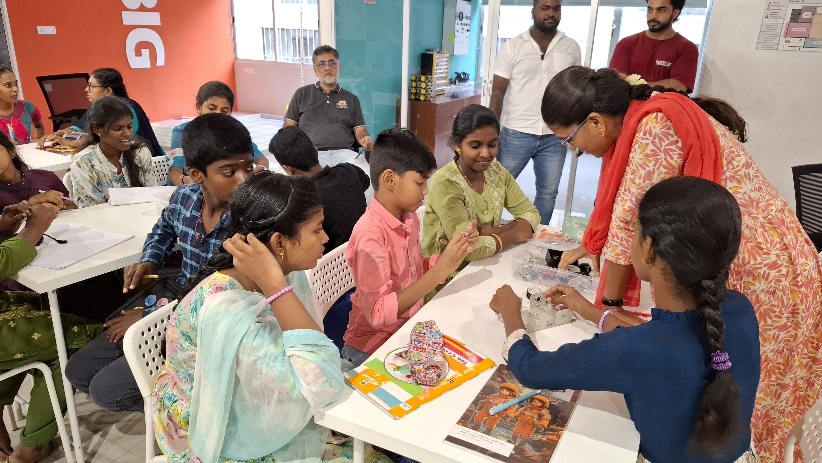
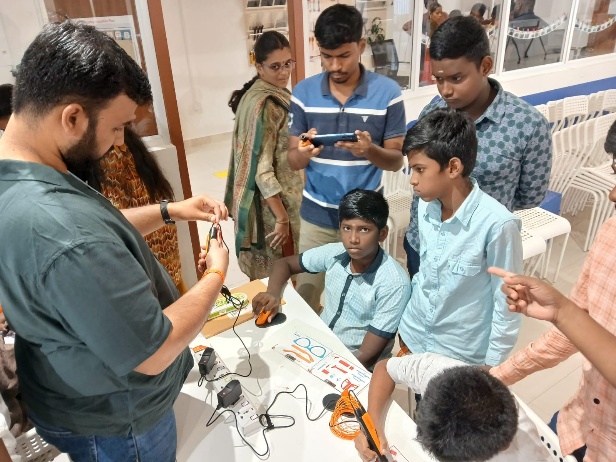
For many of the students, this is also the first time they are travelling anywhere overnight outside of their homes and relatives’ homes. It was a great experience for them. We have agreed with Amazon to bring 50 of our children to this training 3 times a year (at the beginning of each academic term).
Course Designing and Development
See the “Courses Offered” section below for more details about the courses. The first two courses in basic digital literacy and basic programming (Scratch) were compressed versions of our old Eight year curriculum. The first 3 Advanced Courses that came after that were courses from Code.org’s CS Discoveries (Web Development, Javascript Animations and Physical Computing). Then we started designing our own advanced courses.
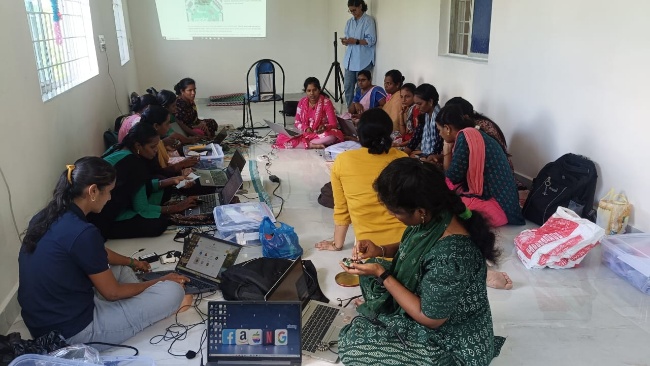
Volunteers work with our own software development team in Chennai to first give the basic structure of the course. Then the developer team works with a teacher team from the RTCs to specify the details of the course and to create a 30-hour lesson plans for the same. The lesson plans are typically done by the teacher teams. This way we have been able to create a set of technically sound courses which are also at a level that is suitable for the students. The new courses designed in this manner include,
- Media Editing – One of our most successful and popular courses offered now by most RTCs.
- Web Development 2.0 – The first version of it was too long. We have created another version that is more suitable for the 6-month terms at our RTCs. It is being implemented in 2 RTCs.
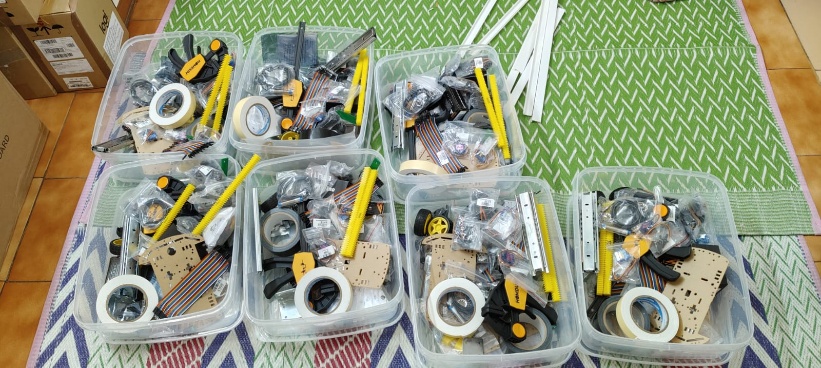
- Robotics 1.0 – This has been designed and is being rolled out in 3 RTCs. It is one of the most anticipated courses and by next term expected to be offered in most of our RTCs.
- Artificial Intelligence – We expect to have this ready by the Feb 2026 term.
- Robotics 2.0 – This will be ready by either the Feb 2026 or the Aug 2026 term.
Teacher Training and Software Development
Teacher training is something we have to constantly do as we are introducing new courses. New teachers are also constantly being added to the RTCs. There is a regular teacher training over video conference being handled by volunteers as well as the more senior teachers themselves. With our software development team getting involved in the course design, they have also got involved with the teacher training especially for the courses that they have designed.
We started trying another interesting experiment. The world over, one of the main problems is to keep the knowledge of the teachers up to date especially in a fast changing area like Computer Science. We felt the best way to achieve this is to get the teachers also involved in software development. This will serve multiple purposes.
- Teachers will learn the latest tools and methods of software development and gain an understanding of the real-world challenges in doing this.
- As the software development in Asha is geared towards education, teachers’ participation will bring in their expertise on the needs of the school/teacher/students into the development process. The software developers will also gain from this experience in their midst.
- Given a large difference in salaries between software developers and teacher this will provide the teachers an opportunity to earn some extra money and even transition to a developer role. It will also provide Asha an opportunity to lower the cost of development.
Some teams of teachers have got involved in this kind of software development and the experiment has been progressing well!
Extension to our Baseline and Endline Assessment
We have been using the Northstar Digital Literacy Assessments to conduct Baseline and Endline assessments for a random sample of our students for a couple of years now. This was done for students who have just joined our Digital Literacy course and those who have just completed the same course. Starting from Feb/Mar 2025, we started doing the same assessment for students who have completed 3 courses with our RTCs. Note that Digital Literacy is the first course completed by our students (unless they directly start with programming). Therefore, by conducting the assessment after the completion of 3 terms, we are measuring if the students still retain their knowledge of digital literacy one year after the completion of the course. This retention can be due to two factors:
- As they are continuing to use computers in their other courses and being with other student who are learning Digital Literacy they retain knowledge of the Digital literacy they learnt.
- There is some stickiness to the DL they learnt and they have not forgotten what they learnt.
See the section below under assessments for more details.
Certificate Distribution Function
The Assessment and the RTC Impressions events mark the end of the term at the RTCs. Typically, after the RTC Impressions, the RTCs host a certificate distribution function for all the students who have obtained a certificate in that term (cleared the assessment and submitted an acceptable project for the course). They also give the children a good lunch during this time.
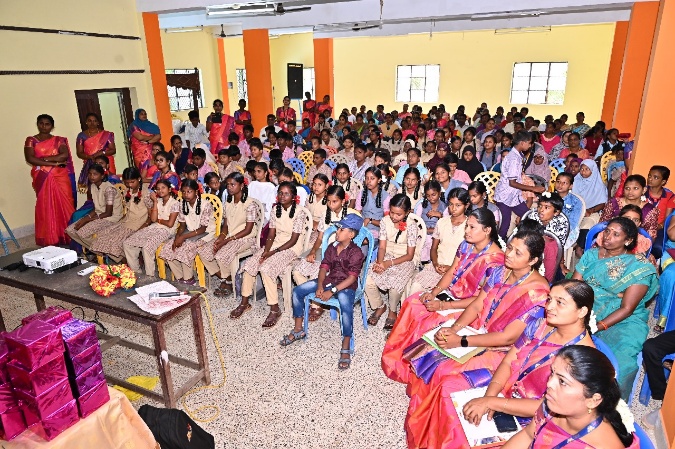
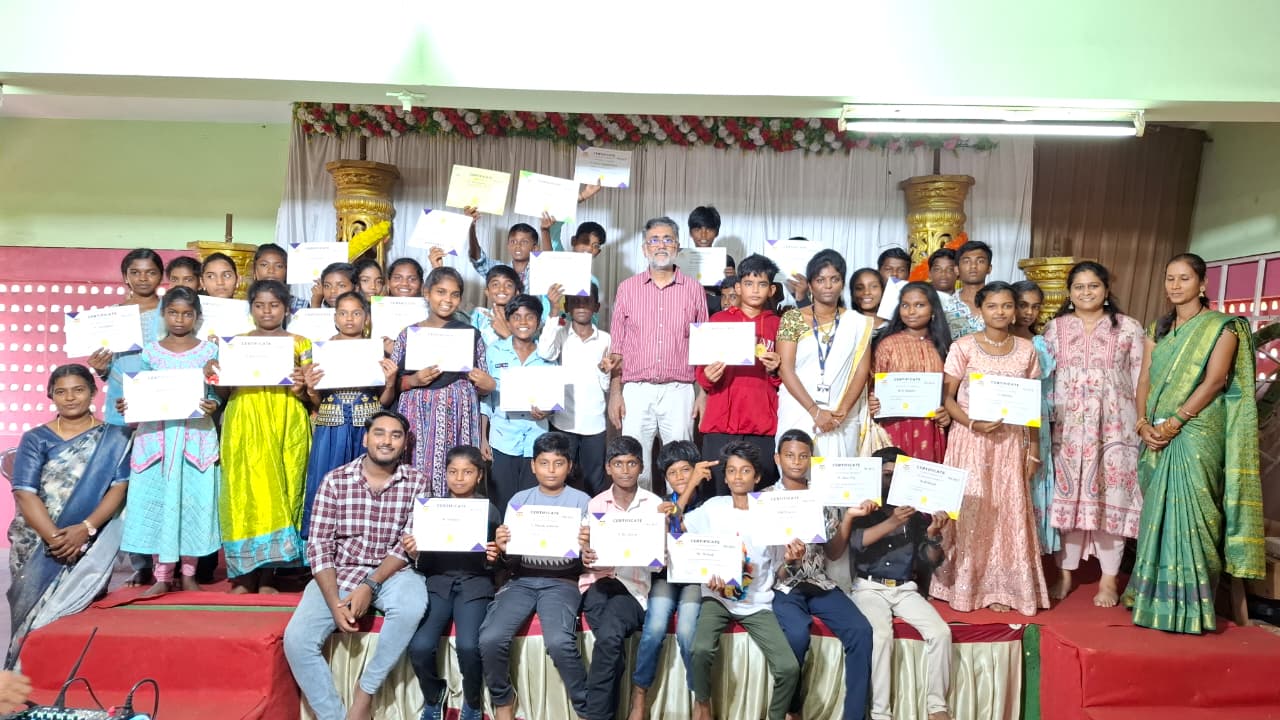
One of the main reasons for hosting the RTC Impressions event was to provide the children a way to develop the skills required to present their work to other, overcome stage fear etc. With the increase in the number of RTCs, this chance was getting harder to come by for most students. We decided this time to bring neighbouring RTCs together for the certificate distribution function and make this a platform for the students of these RTCs to showcase their projects before judges, while also facing Q&A. In these events Asha volunteers and staff acted as judges. Further this also would give the parents and the local school teachers an opportunity to see what these children are learning. This proved to be a great success at all the communities. Organised at local wedding halls, these brought together the parents, the students, the teachers, the govt. officials and the volunteers in a function. We hope to continue this new tradition.
Attendance Reporting
Currently the RTC teachers manually report attendance to their lead teacher. Students’ attendance is also manually maintained in attendance registers. We are working on an attendance and work reporting system. In the RTCs, there is a lot of self-learning that happens especially with more senior students. Therefore, we have created a work reporting system with a separate form for the teachers and one for the students. The teachers will primarily report the work that they do in the schools as well as whether the RTC was opened that day. The students will directly lesson that they worked on that day and whether the lesson was completed or not.
While these forms are already ready, we are in the process of developing a tracker to view the curriculum progress at the level of a course or at the level of an RTC. This will help us monitor how all the RTCs are progressing with the various courses. It will also enable to get a detailed view of the lessons that are proving to be difficult for the students etc.
It is also to be noted that the RTC work reporting system is being developed by a team of teachers guided by our development team.
Courses Offered
See the RTC impact assessment report from Aug 2024 for details of the courses as were offered and planned at that time. There are no changes in the following courses: Basic Digital Literacy, Basic Programming, Web Development – 1, Javascript Animations, Physical Programming, and Media Editing. In addition to these, the following courses have been started.
Web Development – 2 This takes off from where Web Development -1 course stopped. It teaches them how to develop a client-server webapp. It teaches them JavaScript, node, expressjs and a little bit of MySQL to implement the backend. Their project will be a full-stack web application. While this was introduced at 2 RTCs for the Feb 25 to July 25 batch, the initial version of the course was too long and those students are still continuing that course into the Aug 25 to Jan 26 batch as well. We have now shortened it to bring it within one term and will be rolling it out into more RTCs by the Feb 2026 term.
Robotics 1.0 In this course the students will learn how sensors and actuators can be used together to make a Robot perform something. This is built on top of the AdaFruit Circuit Playground Express (CPX) cards along with their Crickit. They will use Circuit Python to control a wide-variety of sensors and actuators. In addition to the sensors on the CPX card, they will use Ultrasonic Distance Sensor, IR Tracking/Avoidance Sensor, Joystick Module, Inductive Proximity Sensor, Moisture Sensor, Color Sensor, Rain Sensor, Photoresistor (external), Force Sensitive Resistor (FSR) etc. And in addition to the actuators in the CPX they will use Different Servo Motors – 180/360 in SG90 (3v), MG995/996 (5v), DC Motors, Stepper Motor, Speakers, Water pump, Relays etc. They will also learn some amount of design of various mechanical parts like Circular motion to drive wheels, Rotational to linear motion using Rack and pinions, gears and telescopic sliders, using servo motors and servo brackets to create 2 Degree of Freedom motion, Open/close or grip mechanisms using gears and servo motors, etc.
Artificial Intelligence Code.org offers a mini-module on Artificial Intelligence which teaches the students how deep learning works. We plan to add to it practical knowledge of how to use Chat GPT, Dall-e, Khanmigo and other popular AI tools. We further plan to teach the students how companies are using the AI tools and integrating it with other things that they are doing using prompt engineering.
Robotics 2.0 This will extend what they learnt in Robotics 1.0 is two main directions. They will learn to make the programs on the controllers work together with broader solutions running on host computers or servers. They will also extend the mechanical design of their solutions through use of 3D printers, drone mounted robots, etc.
Assessments
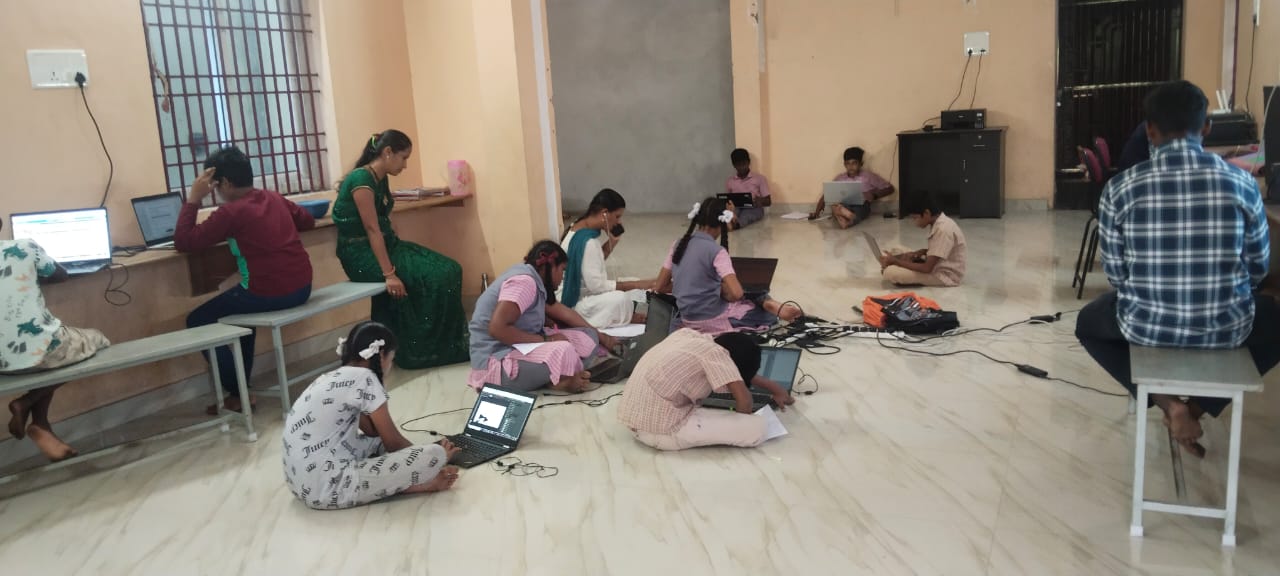
At the end of every term Asha conducts assessments rigorously. At each RTC teachers from other RTCs or from other Asha programs come to conduct the assessment. Each student takes the assessment individually on a computer. We have also provided translations for the questions in Tamil so that the students can answer on their own without seeking clarifications from the teachers. Further, for courses where there are lots of students (like Digital Literacy and Scratch Programming) we provide multiple alternate papers so that students sitting next to each other will not be able to see the answers from others.
Here are the assessment papers we used for the recent term.
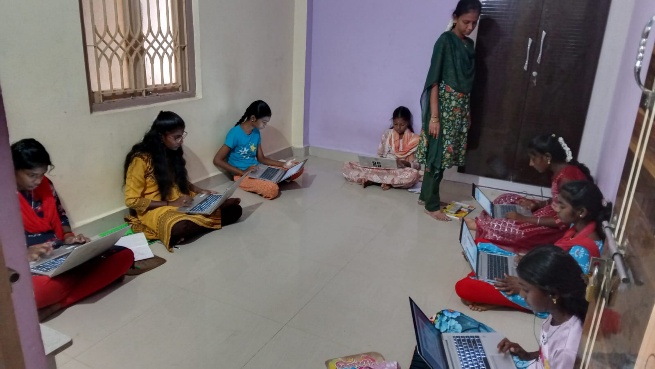
Students show the assessment answers to the teachers conducting it and they are graded immediately. Here are some stats about the assessments and the number of students in different score ranges in the
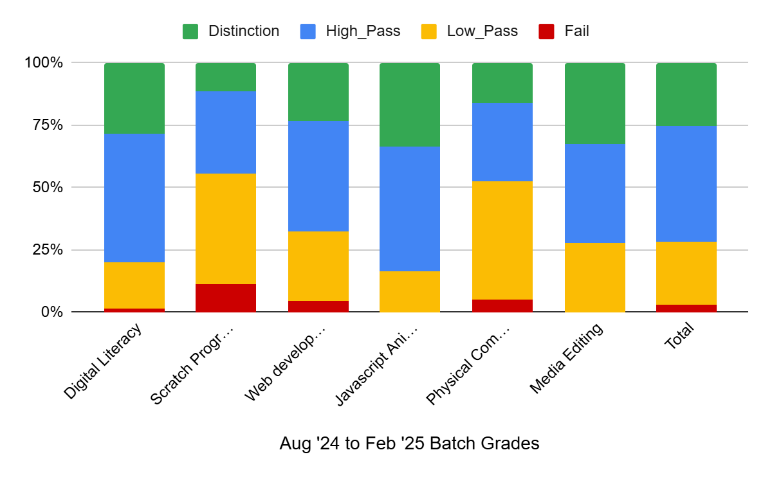
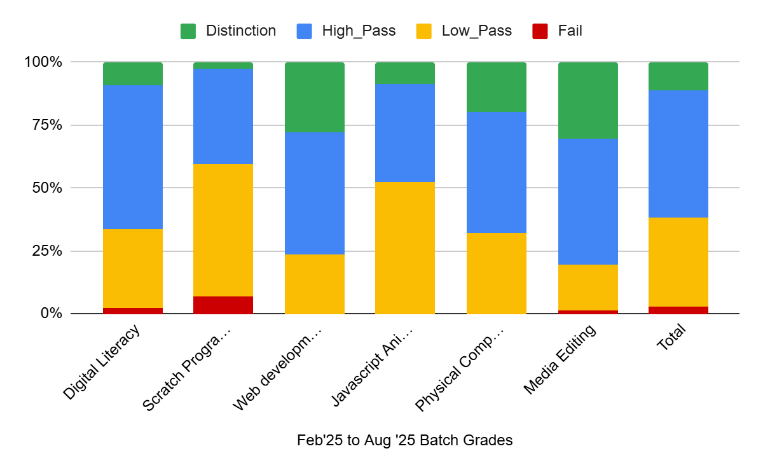
Programming oriented courses like Scratch Programming and Physical Computing tend to be more difficult for the students than use of computer courses like Digital Literacy and Media Editing. The specific paper makes a difference as well.
Standardised Assessment (NorthStar)
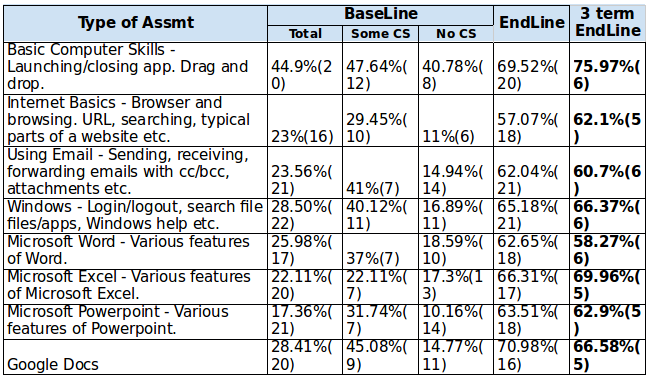
See the RTC impact assessment report from Aug 2024 for details of the Northstar Digital Literacy Assessments and the performance of our students in the endline and baseline conducted at the end of the 4th and 5th terms. As mentioned earlier, the main difference in the last two terms is that we have also conducted the same assessment for those who have completed 3 terms as well. Here are the results from Term 6 (Feb/Mar 2025). Note that the numbers in the brackets indicate the number of students the assessment was conducted for.
And, here are the results from Term 7 (Aug/Sept 2025).
There are some important aspects that any outcome measurement related to education should cover which we are covering through the Northstar Assessment.
- Assessment should be orthogonal to / independent of the course that is being taught. Even for summative assessments, we say that they should be independently derived from the curriculum and not be derived from the lessons being taught. In the case of outcome measurement, it goes even further. Even the curriculum to be taught should be independently derived. Northstar assessments meets this criteria as our course and NorthStar assessments were independently designed. They are even test different tools like Microsoft Office and Google Docs that we do not even teach!
- Related to the above point, the biggest proof of real learning is when transference occurs. i.e. Students are able to use the concepts they have learnt in a completely different context. To some extent Northstar assessments provides this as well.
- Another important aspect of education and learning is the stickiness. It is one thing to know things immediately after they were taught. But it is much more important to remember at least the essence of what we learnt years from when they were taught to us. We have tried to test this to some extent by administering the same set of assessments for those who have completed 3 terms with us.
- Random Sampling – The students selected for these assessments have been picked randomly across all the RTCs user Excel’s random number generator. But the sample sizes are not large enough to statistically give a tight bound on these numbers. But given the similarity of results across the terms, we can judge the general outcome of the courses.
Here are some conclusions from the data in the two tables above.
- Across all the digital literacy areas covered by NorthStar, there is a significant improvement in the performance between baseline and endline. The improvement ranges from 25% to 45%.
- The endline measured for those who have completed 3 terms is very close to those who have just now completed their Digital Literacy course. This indicates that there is a certain stickiness to the learning. This may not be just due to the stickiness of the learning but also because, they are continuing to use computers in their other courses and being with other student who are learning Digital Literacy. Also, those who are continuing to take courses in our RTCs are likely to be students who did well in their DL course. To really measure the stickiness, we will have to also include some students who completed their DL course with us but are not with the RTCs now. We are not doing this currently.
Projects at the RTCs
All the points made in the RTC impact assessment report from Aug 2024 are still valid. P
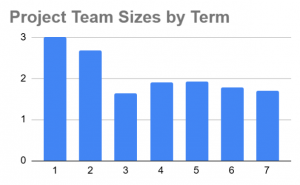
roject submissions are continuing to grow both in quality and quantity. Specific gaps in learning at all RTCs were spotted and addressed. For eg., most teachers did not use cloning, list variable, blocks etc. in Scratch a couple of years back. After focusing on these, most of the projects are now using these effectively. Similarly, after seeing some projects use motion path to good effect, most RTC project use these in the presentations.
In terms of quantity the project team sizes are continuing to fall. While we allow 3 students per team, it has now fallen to less than 1.7! Here is a graph of the team size over the terms. Note that terms 3 and 4 were a little anomalous as indicated earlier. The trend is in the downward direction.
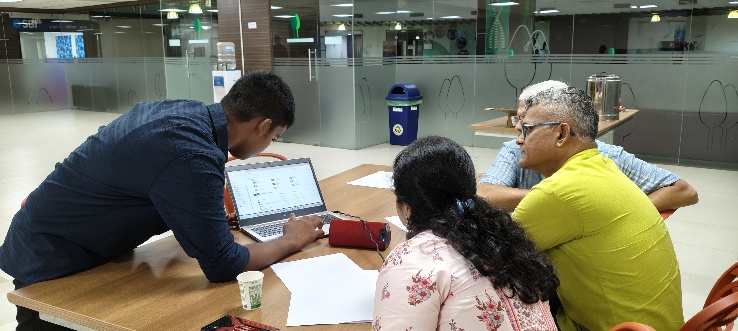
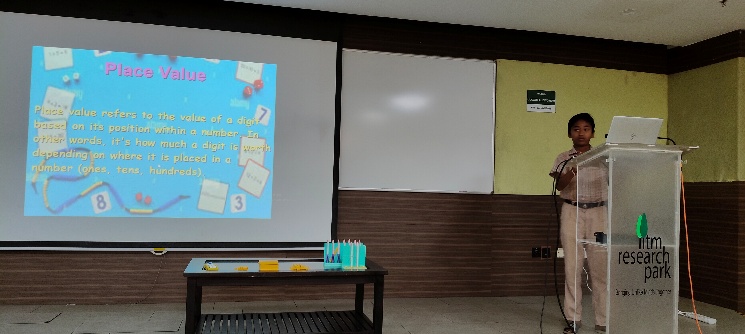
In the previous report we had listed several things that students gain by participating in the Asha Impressions competitions: Recognition of Effort, Sense of Achievement, Healthy Competition, Skill Development, Public Speaking & Confidence, Feedback & Improvement, and Exposure to New Ideas. As the number of RTCs and the number of students in the RTCs are continuing to increase, these opportunities were being denied to most students. As described in the RTC operations section, we have started bringing together RTCs into a bigger function at the end of the term. Here are some testimonials regarding these functions.
Thomur RTC – Ms. Nithiyashri.S, Student, Grade 10
“I am Nithiyashri and studying std X at GHS Thomur. I had already completed Digital Literacy, Scratch, Physical Computing and Web development 1.0. I was very happy to be there in the event and I felt inspired by the other student’s projects. When I received the certificate from the chief guests for Web development 1.0. I felt very happy during the ceremony. For me, it was a day of happiness and joy. We were given transport facility to attend the function. It was a nice experience for me.”
Thomur RTC – Ms. Logeshwari.N, Student, Grade 9
“I am Logeshwari and studying std IX at GHS Thomur. We were given this opportunity to show our projects to the students of KKC and Tiruthani RTC. I got ideas for my running course and I was inspired by the ideas of the others. My project was selected from the showcase and it is “Seasons”. RajaRaman sir appreciated so much for the sensors usage in the project. My project was chosen to give a special prize during the certificate Distribution Event. I was happy and delighted for arranging the day for us. I enjoyed the day.”
Nalantinputhur RTC – Ms. L.Jananeeswari, Grade 9
“I was very happy to participate in this function. Another thing is that even though I was eager to go to Chennai for my project, I got another opportunity I was happy when I put my project on screen on stage. My mother also came with me and everyone praised me. More than how happy I was, my mother was very happy, and seeing that, I also became happy. All the teacher spoke well to me. Many people got opportunities just like me. I learned a lot from everyone’s projects. I was amazed to see projects like media editing, scratch, web development and digital literacy. My friends and their parents were all happy. Thank you for this opportunity.”
Impact of the RTCs
An independent impact assessment conducted by AuxoHub between Jan to March, 2025 covering 60 students, 9 teachers and 27 others including government school teachers, judges at the RTC events, etc. It highlighted over 90% pass rates, strong digital literacy gains, and improvements in Maths, English, and problem-solving. Children who had never had the opportunity to touch a computer now confidently write code, design projects to solve real-world challenges, and present their work with pride. You may read the complete report here or the summary presentation here.
Asha has been working hard to ensure RTCs continue to innovate and provide the best education for school children in technology in a cost effective manner. With support from IITM Pravartak and donors, we hope to continue that work.