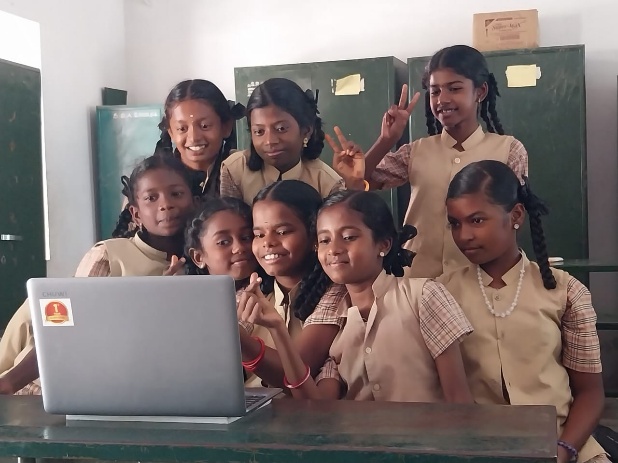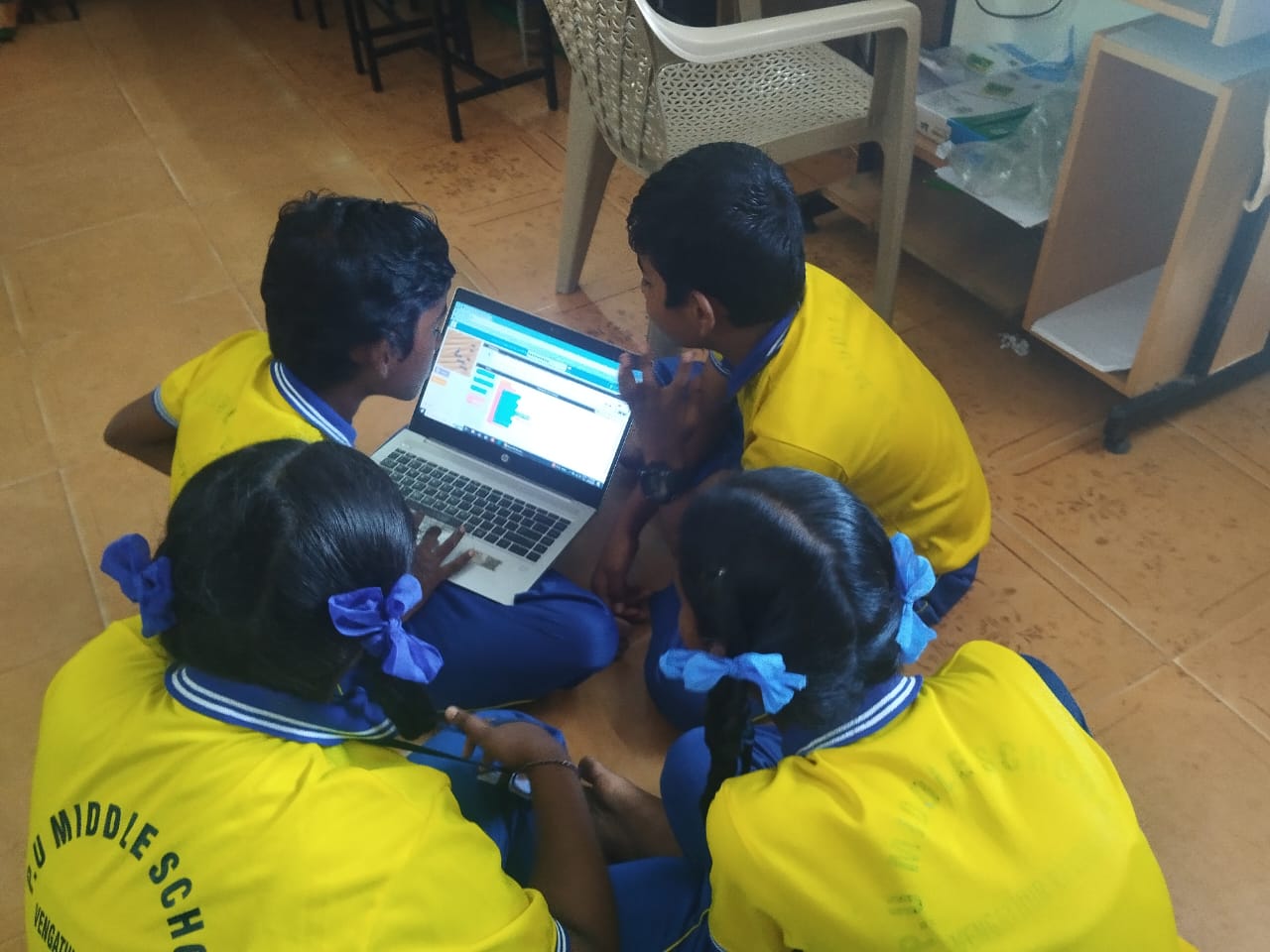
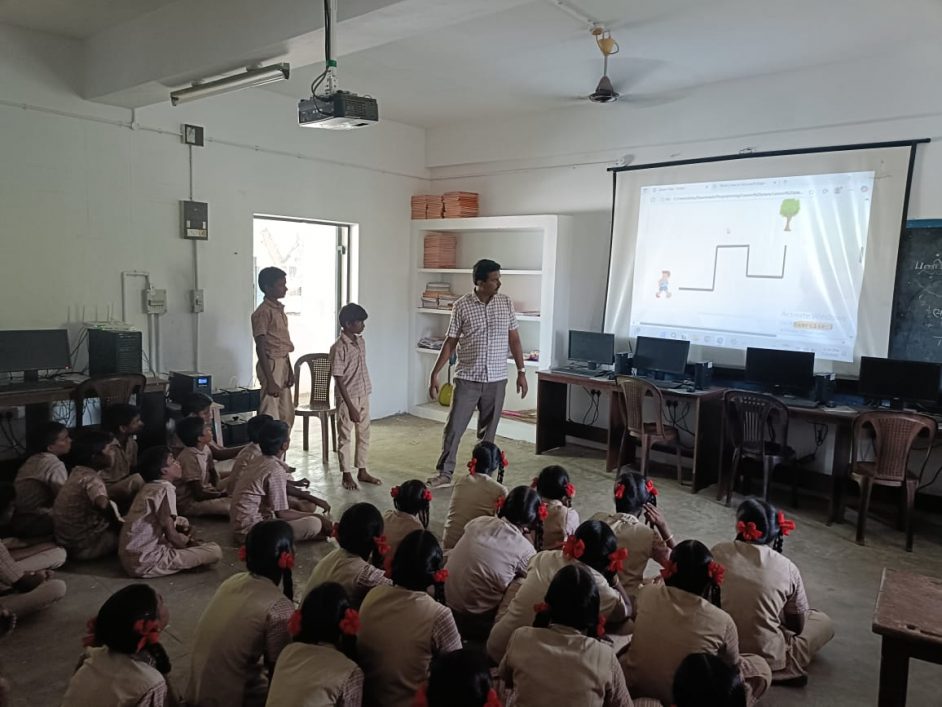
ACE program trains government teachers in 120+ schools to teach Asha’s CS curriculum to their students. Here is a report on the various aspects of the running of this program.
by Rajaraman Krishnan, Volunteer Asha Chennai
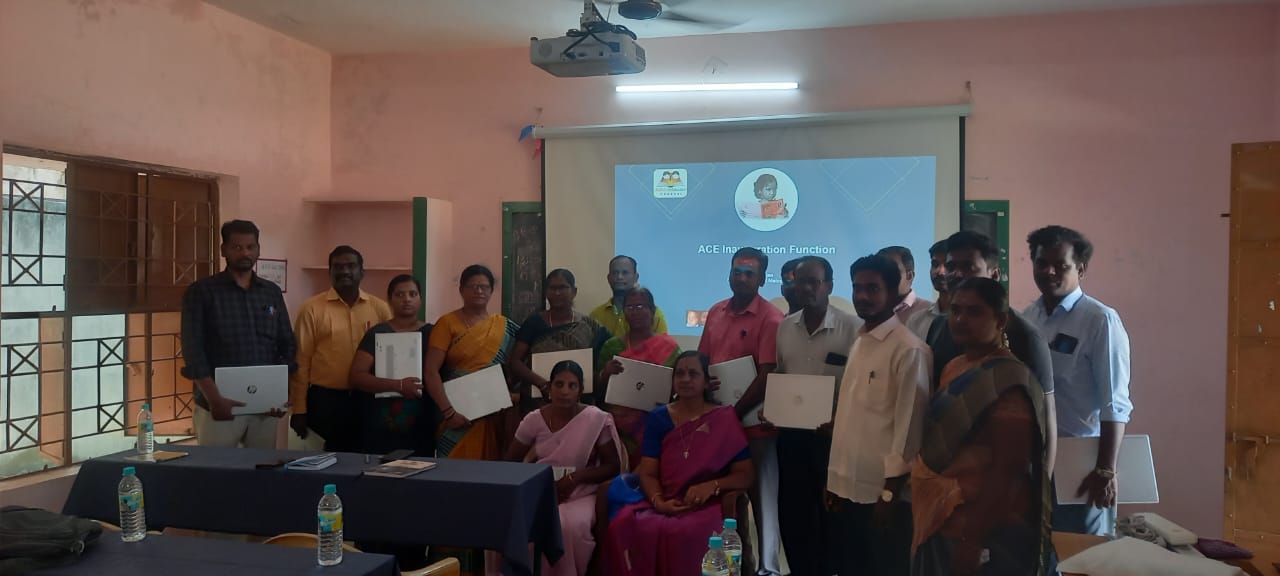
Asha Chennai started the ACE (ஆஷா வழி கணினி கல்வி or Asha Computer Education) program at the first batch of 52 schools in Oct 2023. The program was launched in the second batch of 53 schools in Aug 2024. It was started at another 40 schools in same districts in June 2025. The aim of the program is to implement a two year CS curriculum using government teachers themselves at these schools. This will help prove the scalability and quality of our curriculum, pedagogy, training model, evaluation model and our overall delivery. The hope is that a successful implementation of the program over a two-year period will lay the foundation for a broader adoption.
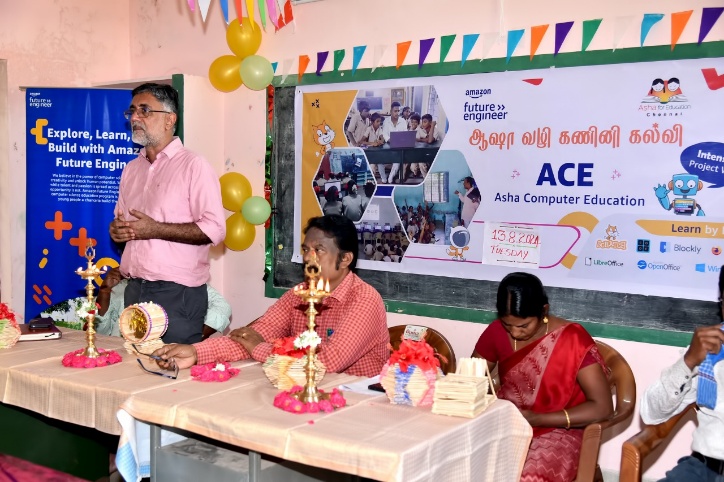
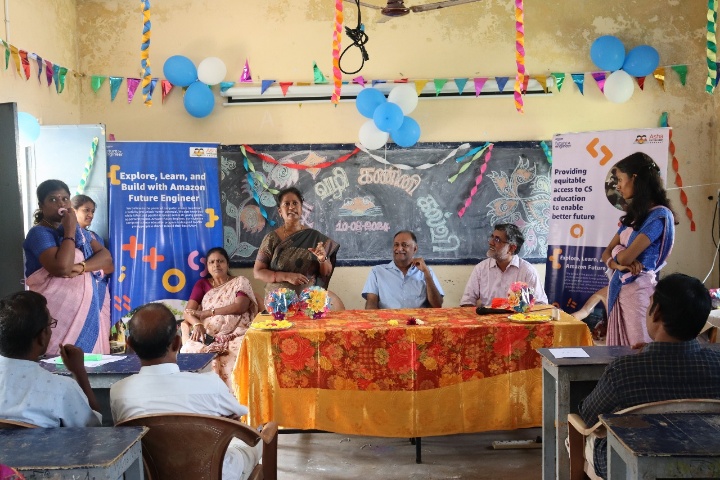
The ACE website describes the program in details. This report extends the following older reports.
- Report on the ACE Impressions Batch 1 and Batch 2 held in March and June 2025 respectively.
- Infrastructure assessment report from the ACE and other schools we work with done in April 2025.
- ACE Status report from May 2024 at the end of the 2023-24 academic year.
- ACE v2 Inauguration report from Aug 2024.
- ACE v1 Inauguration report from Oct 2023.
There has been a long gap from the previous status report written in May 2024. This report will provide an update on the staus of the ACE as on date.
Schools, Teachers and Batches
On Oct 19th 2023, the program was inaugurated and the first training session was completed with teachers from 52 schools – all from Thiruvallur District. This was then expanded by another 53 schools from Thiruvallur, Thoothukudi, Thiruvannamalai and Villupuram in Aug 2024. When we started the program in Oct 2023, it was started as an extended one-year program to complete only by end of the 24-25 academic year focusing on Digital Literacy but with a little bit of exposure to programming also thrown in. However, when we launched the second batch in Aug 2024, it was structured as a two-year curriculum. The first year covered Digital Literacy and the second year covered programming. As the program started late for the second batch, we pruned down a few of the lessons so that the schools may complete the first year of the program within the 2024-25 academic year.
In what went beyond our wildest expectations, all the 105 schools from both the batches went on to complete the ACE program as scheduled. This was especially remarkable for the second batch. They didn’t have the time to work on the project before the schools closed by the end of April 2025. They stayed open and had the students coming in till 12th of May to complete and submit the projects! Read the details here.
Note that there was no official requirement that the teachers stick with this course and complete it. And these teachers had several other works which were mandatory as most of the teachers were subject or secondary grade teachers. The schools also had several other pulls on the resources, the teachers time being the most important one. Yet all the schools completed the course for all their students and with quality as will be detailed in the coming sections.
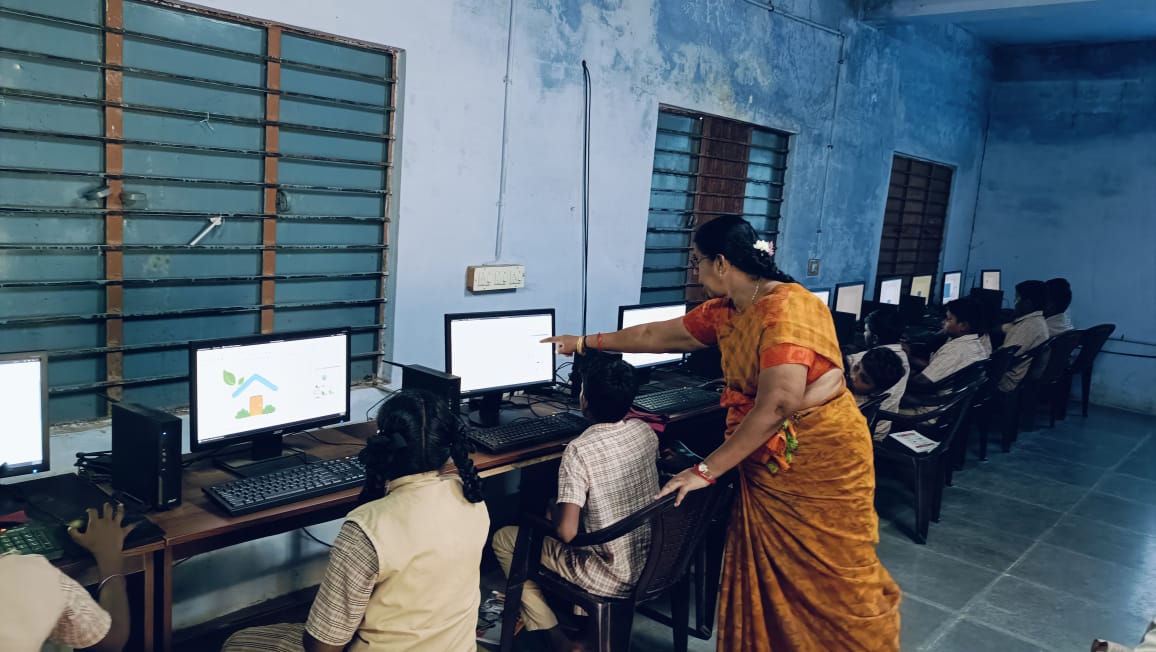
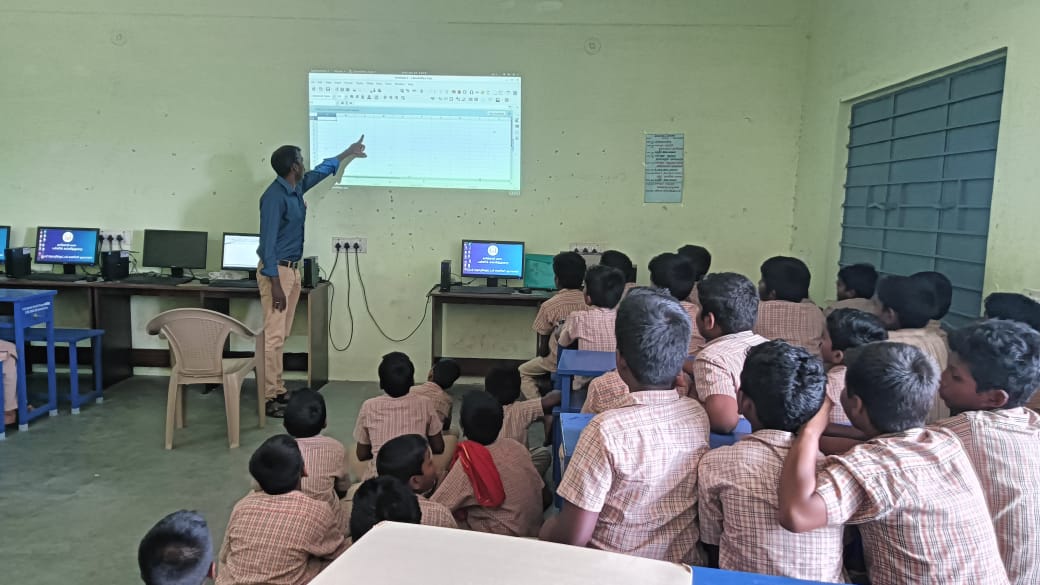
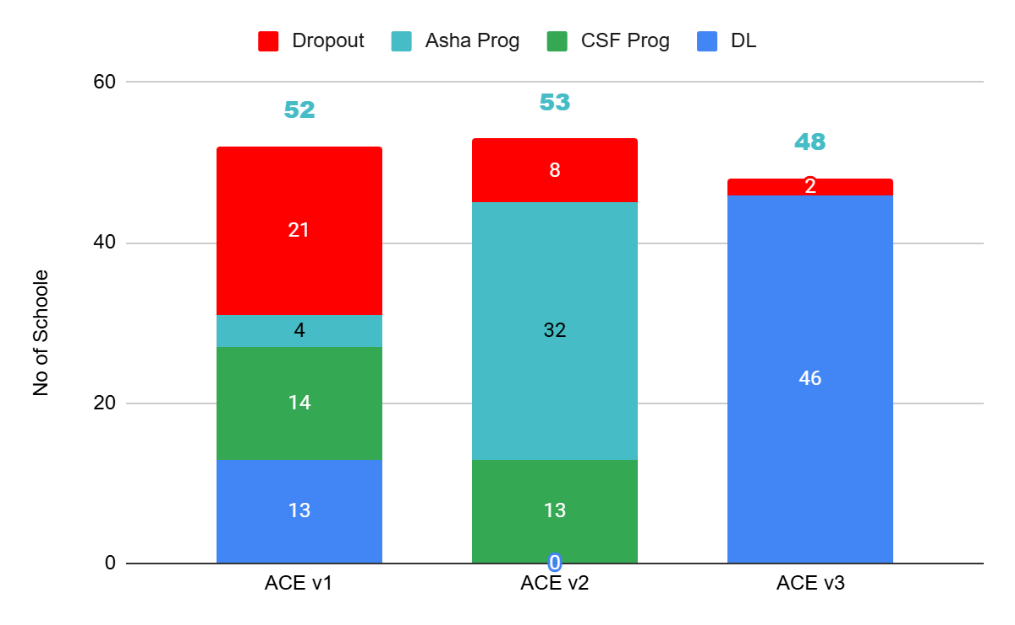
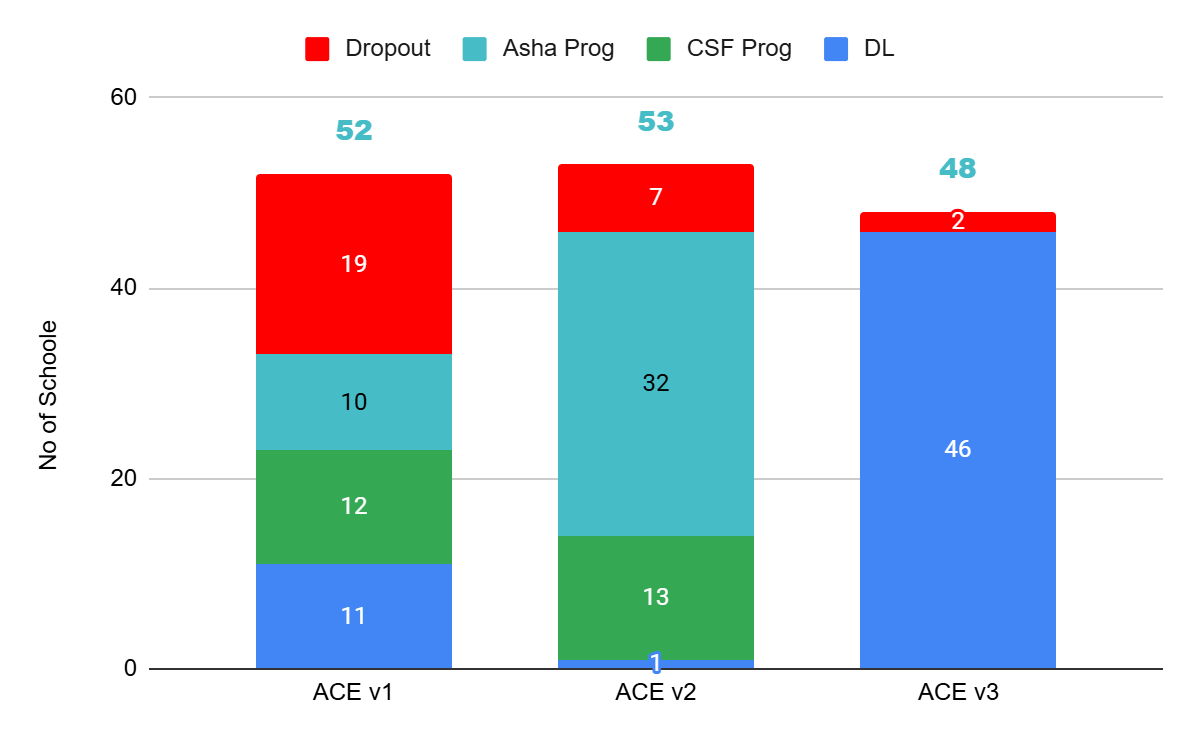
As we moved into 2025-26, some of the first batch schools did not continue. The most important reason was that the teachers had been posted to a different school. As the first batch was started as a one-year program, they often started with the 7th standard in the case of middle schools so that they will complete the program when they finish the 8th standard. In the case of high / higher secondary schools, they started with the 8th standard so that these children will wrap up the ACE program by the 9th standard as their schedule becomes very tight in 10th standard because of the board exams. Therefore they couldn’t continue the second year program for the same batch of students. In some cases, they once again offered the first year program for a new class of students and in some cases they dropped out. The batch 2 schools have continued on to teach programming for the same class of students. The following graph shows the schools in the 3 batches and what they are doing now.
Computers Donated and Tracked
Laptop Donations
Laptop donations from Amazon has been critical in implementing the ACE program (and other programs of Asha). We have received the following donations of laptops from Amazon.
Oct 2023 267 Laptops.
May 2024 500 Laptops
Dec 2024 500 Laptops
Feb 2025 200 Laptops
July 2025 500 Laptops
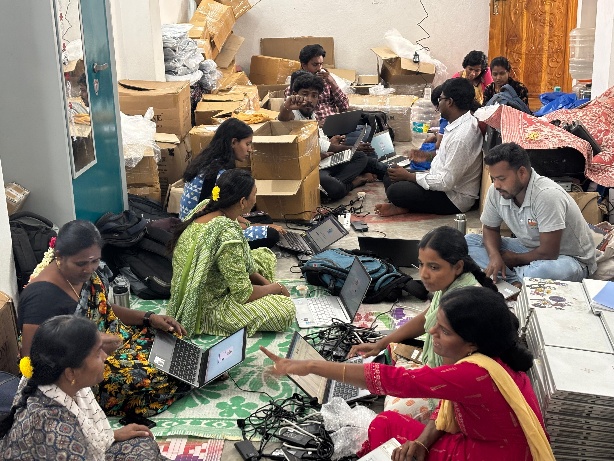
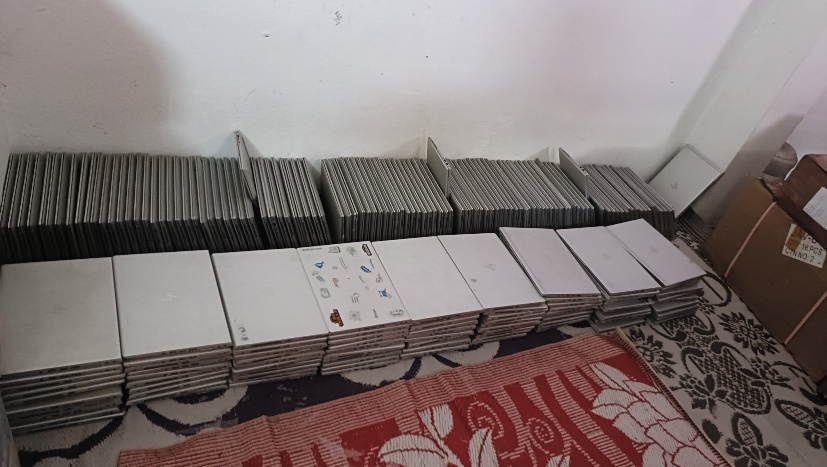
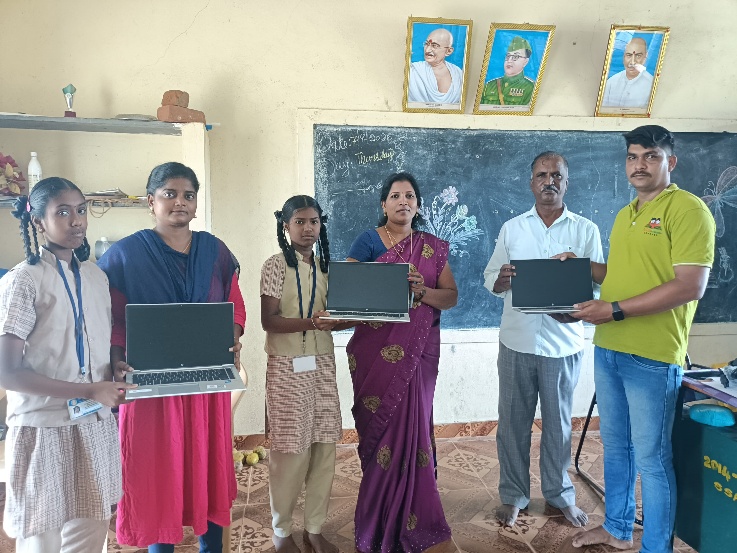
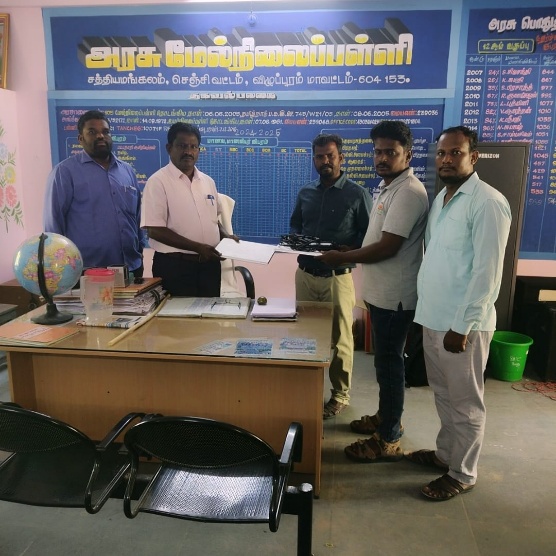
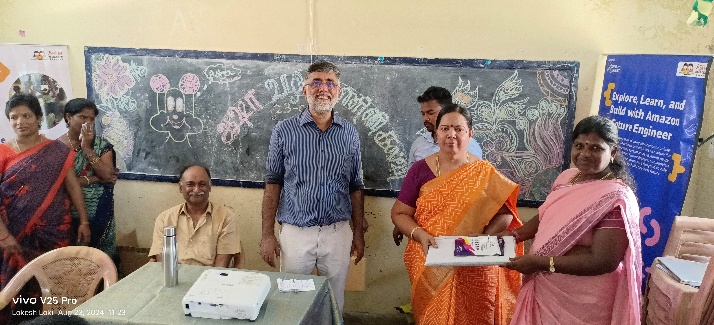
We initially started by distributing one laptop to each teacher and up to 3 laptops to each school depending on their need. We weren’t providing laptops to schools with High Tech lab. However over time, we have had to donate laptops to even schools with High Tech lab as that infrastructure was not available for the ACE program often. We purchased 52 laptops for the ACE v1 teachers. For the ACE v2 and v3 teachers, we only provided donated laptops. The donated laptops from Amazon have mostly been of good quality and have served us well. Here is a graph that shows the number of laptops given to the schools.
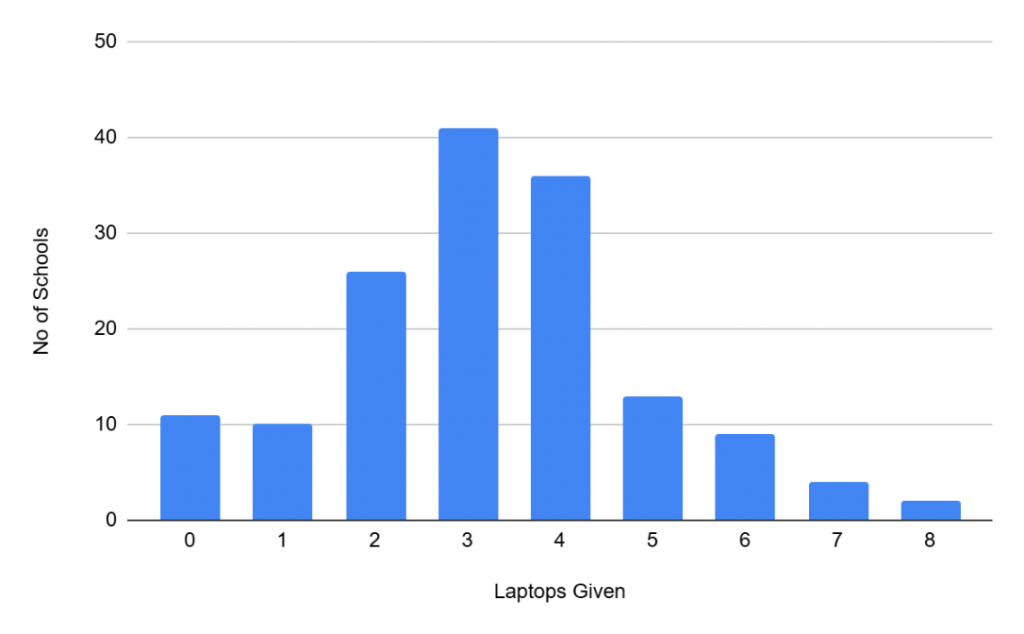
Note that this graph does not include the one laptop given to each teacher in the school to implement the program. To 11 schools we have only given the teacher laptops. At the other end, there are two schools where we have given 8 laptops each and in addition a teacher laptop as well. In total, we have given 492 laptops to the schools and another 152 lapto ps to teachers. Of these about 20 laptops are currently not working.
Maintenance of the Laptops
If there are any problems with the laptops, the govt teachers first reach out to our trainers who have been trained to do basic maintenance themselves. If they are unable to fix the problem, at each location we have a system engineer who will then look at the problem. If it is not possible to fix soon or some parts are required, we replace the laptop with a spare and continue working on the problem. For some of the problems we would also need to give the laptop to a service centre. If the problem can still not be solved, we harvest the good parts and condemn the device.
Asset Tracker
With a large number of laptops spread across an equally large number of schools, we have done some automation of the asset tracking process.
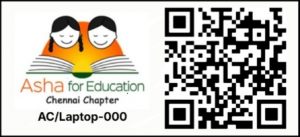
Each laptop is given an asset ID and an asset ID sticker with the asset ID and a QR code like below is stuck on the laptop. Once a quarter we have the teachers at all the school scan the QR code and report the status of the laptops. You can try scanning the QR Code below to report the status of a virtual laptop!
This enables us to know the status of all the laptops. In addition to this we also have a pinger app that runs on all laptops we have provided which when connected to the Internet periodically send an “I am alive” message to our server. We can thus also know that the laptops are really being used and not just gathering dust in some bureau.
Problem reporting and tracking of the problems, is done using Google Forms and a Google sheet currently. This Asha Chennai Computer Maintenance (or CCM) is also being brought into our own server and can be triggered from the same QR code mentioned above.
Work (Output) Tracking
At the start of the ACE program, we were using a Google Sheet to track the work being done by the teachers and the trainers. Towards the end of 2023-24 academic year, we developed forms for teachers and trainers to report the work they were doing. Each time the teacher teaches a lesson, they report the detail. This includes the following,
- School (comes from the session).
- Teacher (comes from the session).
- Class and section (comes from the session unless they take multiple classes / sections).
- Date (comes from the system).
- Lesson they taught (comes prepopulated if they scaned the QR code at the end of the lesson in their teacher manual).
- Attendance – Has to be entered. Note that the total class/section strength is entered into the system at the beginning of the year.
- Comments or Notes if any.
As you can see from the above, there is very little that the teacher has to enter manually. They just scan the QR code at the end of the lesson and most of the form comes prepopulated and they just enter the attendance, add any comments and submit.
Trainers who visit schools to assist/observe a class also submit a form on the class they observed. They are required to submit their own (trainer) name as well. Otherwise the form is similar.
Data Approval process
The teacher and trainer form submissions are viewed by “Lead Teachers” who then approve or reject the data entry. They can also edit and approve the data. This is then approved on a monthly basis by the “Administrator” for the ACE program.
Curriculum Tracker
For each curriculum we are implementing (ie. 1st year or DL, 2nd year Asha programming, 2nd year CSF Express programming), we have a tracker which shows the progress of the implementation over the academic year. In the picture below you can see the curriculum tracker for ACE v2 Digital Literacy in the year 2024-25.
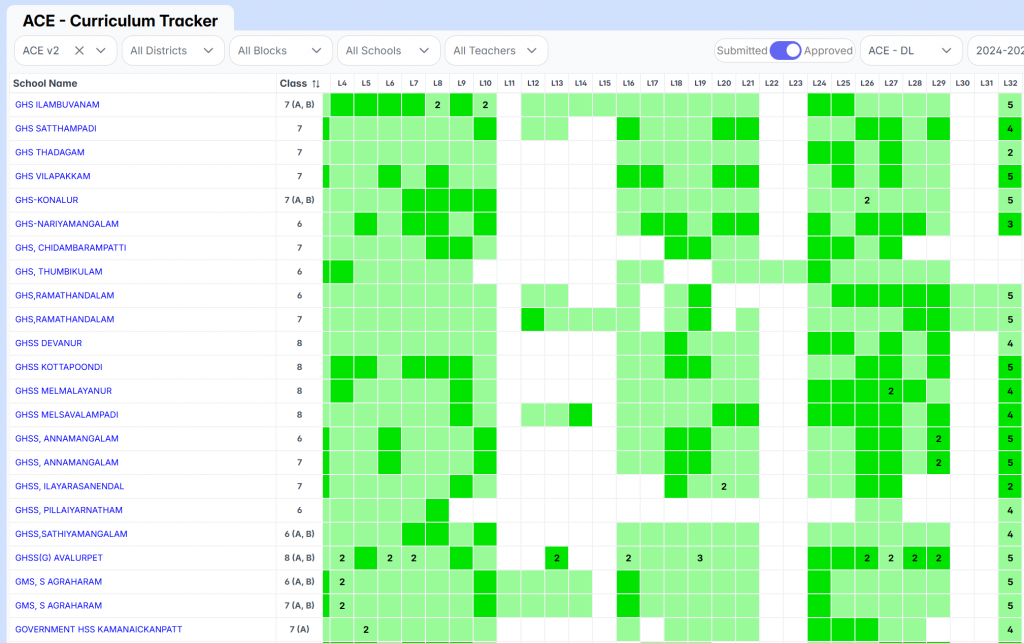
Each green square represents a lesson taught at the school. The reason some of the lessons (eg. L10 to L15) are white for most schools is that we dropped some of the lessons given the paucity of time. Dark green squares represent visits on that day by Asha trainers. The number in the square indicates that the same lesson was repeated multiple times either because the group was broken into two and separate classes taken or the lesson had to
be repeated. If the lesson was taught in the wrong order (not in the pictures here), then that will be shows with a small red ‘x’ inside. Clicking on the lesson numbers at the top will open the lesson plan for that lesson and hovering will show the lesson title. Clicking on the green squares will provide the data entries (bo
th trainer data and teacher data) corresponding to that school-class-lesson combination.
Here are couple of more pictures showing the progress of the CSF-Express Programming and Asha-Programming curriculum this year.
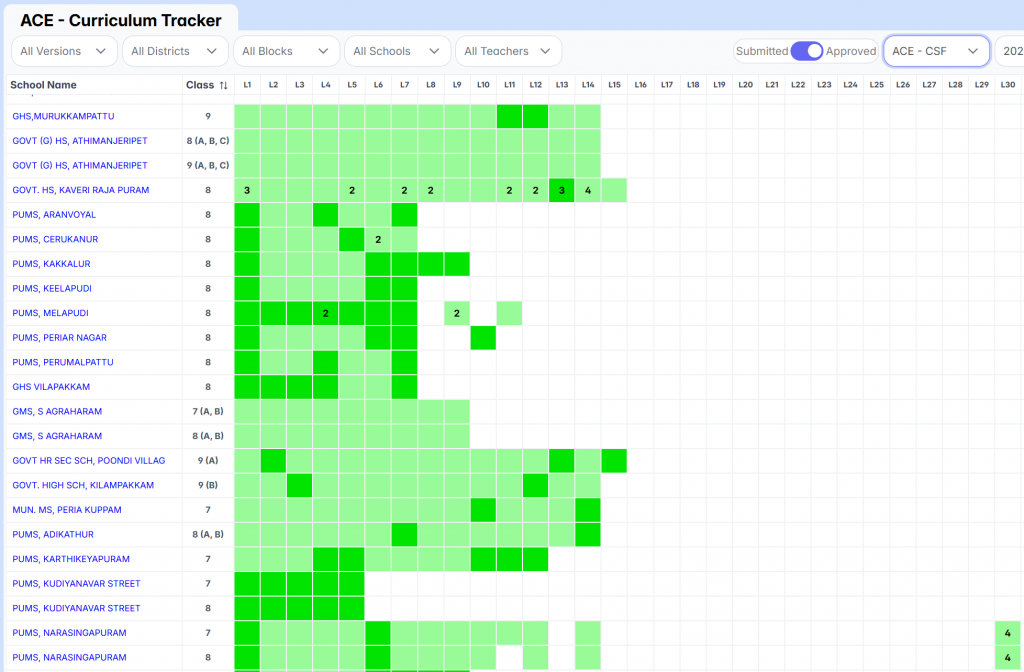
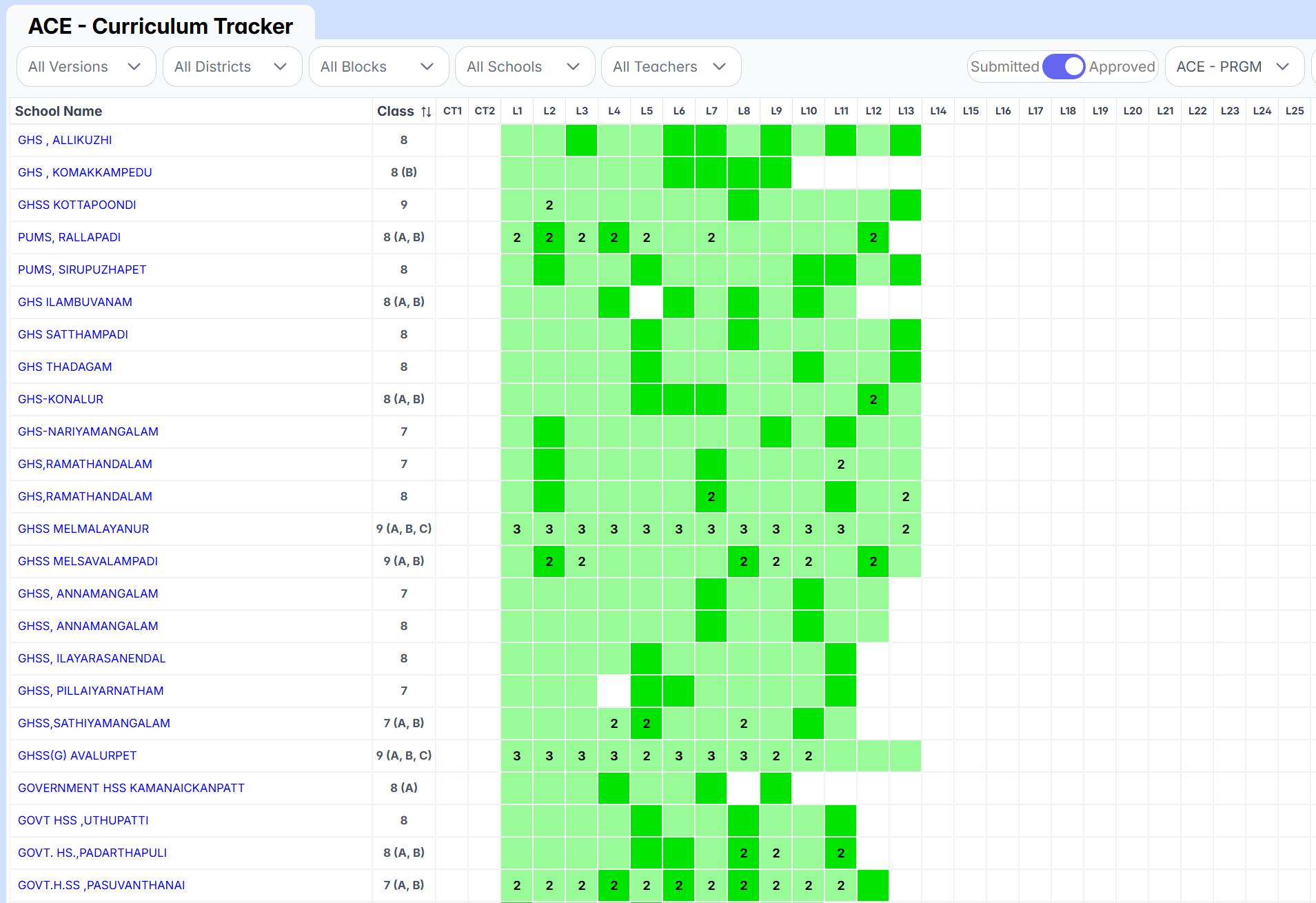
As you can see the curriculum tracker provides a powerful tool to quickly get the status of the curriculum implementation at the schools and figure out any challenges at a school or with the curriculum.
How is ACE doing? – Term end Assessment
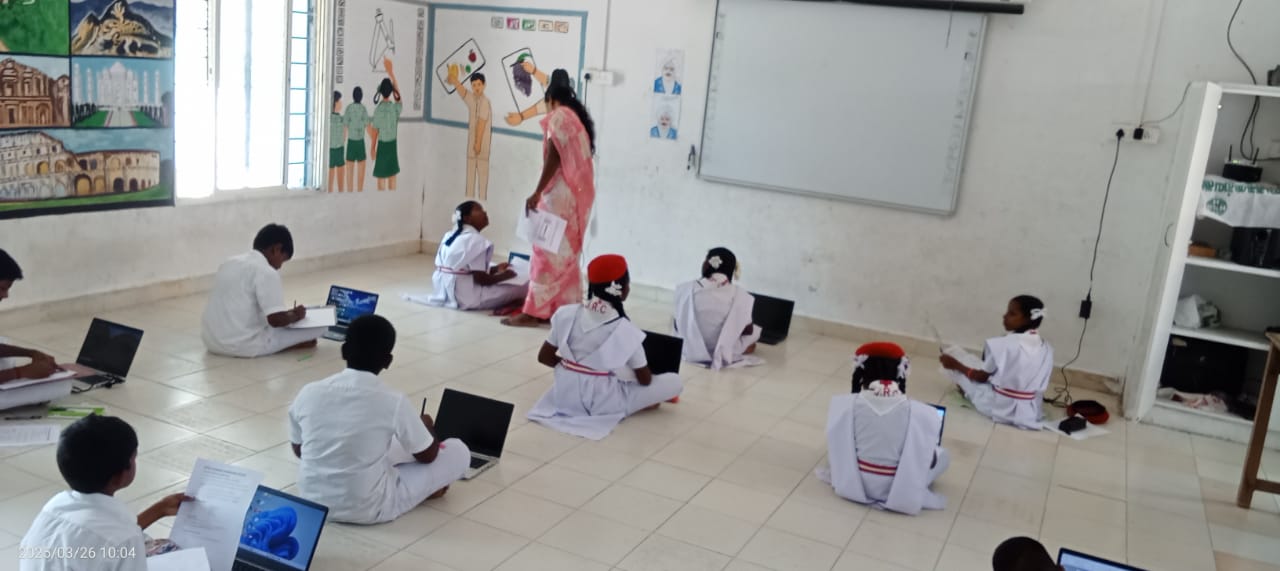
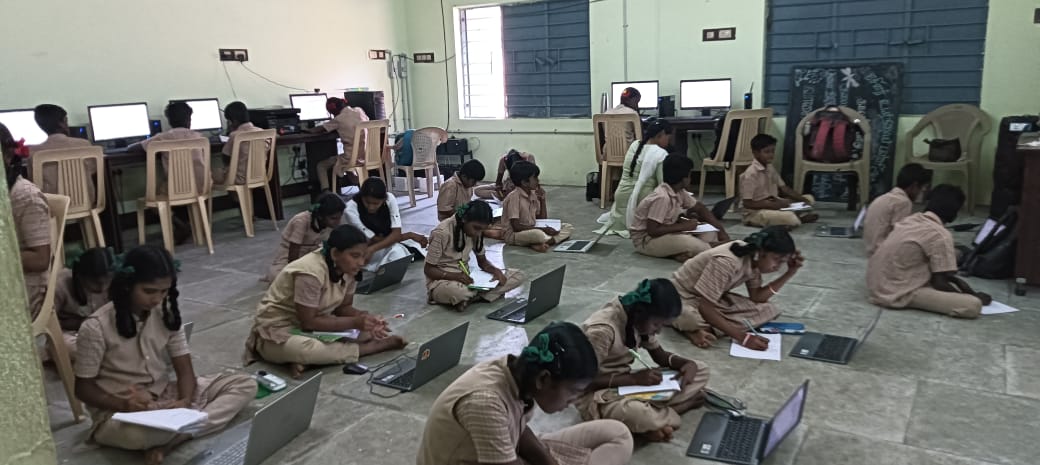
At the end of the 2024-25 academic year, Asha conducted assessments to check if the students had learnt the contents of the ACE first year curriculum. This was held in Feb-Mar 2025 for the ACE v1 schools and in Mar-Apr 2025 for the ACE v2 schools. This was rigorously conducted. At each school the trainer for that school was paired with another trainer to conduct the assessment with no participation by the teacher at that school. The assessment is conducted individually for each student on a computer as well as pen and paper. There were 4 alternate papers given for the students so that there is no possibility of copying. Here are the papers we used for ACE v1 and the papers we used for ACE v2.
Students’ Performance
Here is how the students performed in the assessments.
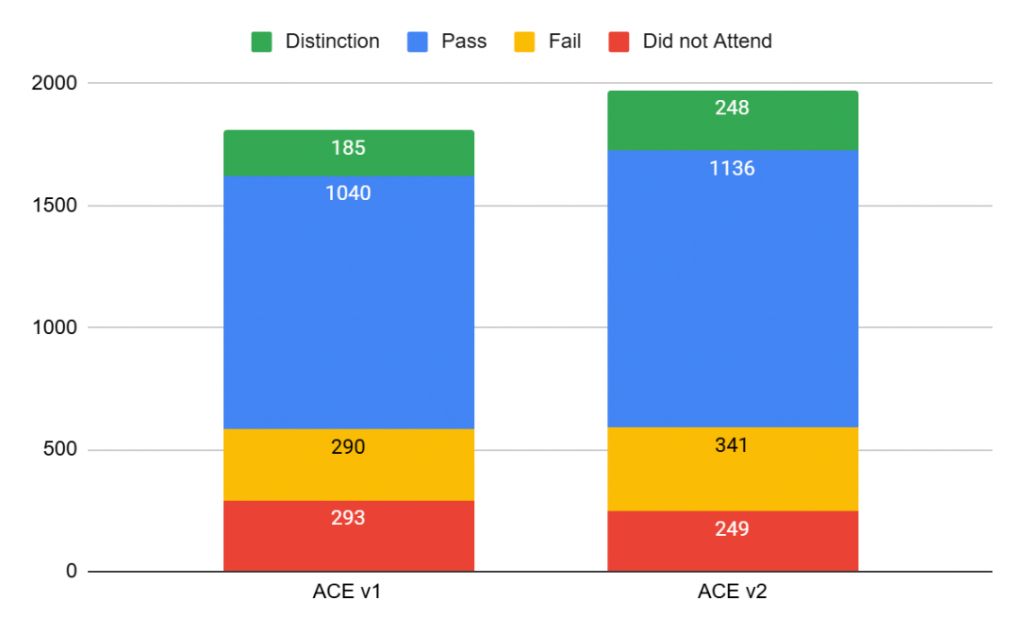
The high number of absentees had several reasons,
- Festivals in some villages meant there were lots of absentees.
- As CS is not a proper required subject, our CS exams were not treated with as much seriousness as the other subjects either by the school or by the students.
- Some of the children were indeed absent for good reaaon and there were also some mentally challenged children in these classes who could not have taken our assessment.
The important point to note is that because of time pressure, we could not go back to any of the schools to conduct the assessment a second time for the students who missed out on the assessment. We hope to improve upon this, this year.
The students who scored 8 marks or less in the assessment are considered to have failed. Those who scored 25 marks or more are considered as having passed with distinction. We have deliberately made the cut offs low so that we do not compromise on level of the assessment or the way it is graded. One broad observation from the assessment was that the students mostly did well in the practical questions like creating presentations or doing some work on Excel. They were struggling a lot more to answer questions like “A ______ is used to store multiple files together” where folder is one of the answer options! We believe this has to do with their poor reading skills.
How is ACE doing? – Endline Assessment
For an orthogonal (i.e. unrelated to our own curriculum) standardized (results can be compared across time and with other programs / organisations) assessment, we have been using the Northstar Digital Literacy Assessments. For the ACE programs we did not conduct a Baseline. However, since the ACE programs serves students in classes 6 to 9 in government schools just like our RTC program does, we used the baseline data from our RTCs. If anything, the RTC program baseline will have better results because these schools have more feeder schools that are supported by Asha and therefore more students come with some experience in Computer Science. Here is a table that shows the baseline from the RTC program and the endline from both the ACE batches.
| S.No | Activity | Baseline from RTC Batch 6 | ACE v1 Endline | ACE v2 Endline | Notes |
| 1 | Basic Computer Skills – Launching/closing app. Drag and drop. | 44.9%(20) | 64.19 (14) | 67.69 (14) | |
| 2 | Internet Basics – Browser and browsing. URL, searching, typical parts of a website etc. | 23%(16) | 46.45 (13) | 50.12 (12) | |
| 3 | Using Email – Sending, receiving, forwarding emails with cc/bcc, attachments etc. | 23.56%(21) | 47.22 (14) | 38.86 (13) | Email not taught for v2 |
| 4 | Windows – Login/logout, search file files/apps, Windows help etc. | 28.50%(22) | 59.11 (15) | 64.60 (15) | |
| 5 | Microsoft Word – Various features of Word. | 25.98%(17) | 60.79 (15) | 51.99 (16) | |
| 6 | Microsoft Excel – Various features of Microsoft Excel. | 22.11%(20) | 49.59 (14) | 42.73 (14) | Excel not taught for v2 |
| 7 | Microsoft Powerpoint – Various features of Powerpoint. | 17.36%(21) | 44.44 (14) | 47.99 (14) | |
| 8 | Google Docs | 28.41%(20) | 51.15 (14) | 57.15 (12) |
As can be noted, across all the digital literacy areas covered by NorthStar, there is a significant improvement in the performance between baseline and endline. The improvement ranges from 25% to 45%. Note that we teach OpenOffice or LibreOffice and do not teach Microsoft Office or Google Docs. Despite that students have been able to demonstrate a competence even in handling unfamiliar tools. This is an important aspect of digital literacy in a constantly changing technology landscape.
How is ACE doing? – Project Work
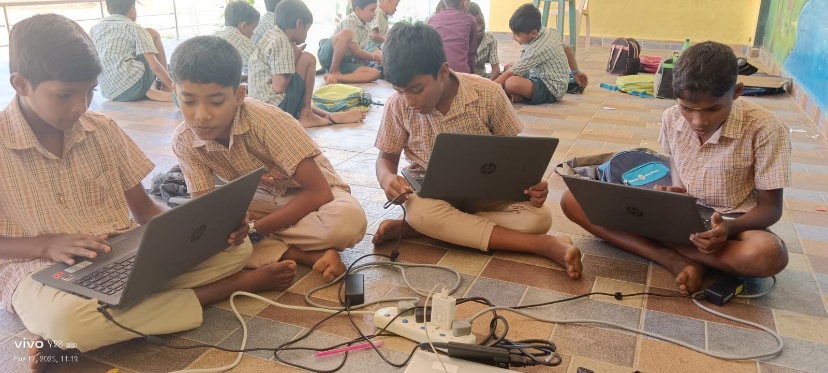
Here are couple of reports on the ACE Impressions events for ACE v1 and ACE v2 batches. You can read these to understand the important role project work plays in the ACE program. While the competition played an important role in motivating the school and teacher to put in the best effort, the main purpose of project work is instructional. By doing the project work, children reinforce what they learnt over the whole year through goal-driven, intensive learning. Therefore, rather than just looking at the best projects which get chosen for the RTC Impressions project, we look two other factors.
Team Size
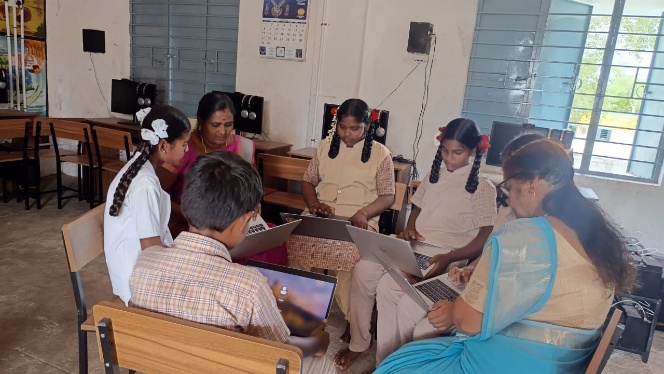
We aim for smaller team sizes. For the ACE v1 batch, there were a total of 373 projects were submitted with an average team size of 4.83. The ACE v2 batch submitted 470 projects with an average team size of 4.2. We were aiming for some number between 4 and 5 for both the batches and this was achieved. As the program matures, we will aim for smaller team sizes. There were schools that submitted as many as 15 to 20 projects. This is clearly a lot of work for the teacher to manage.
Average Quality of the Projects
All the projects are initially evaluated by lead teachers who then select the best 60 or so to be reviewed by the volunteers who then bring it down to about 17 projects for the final Asha Impressions event. When the lead teachers initially evaluate the projects, they check for the following parameters in the projects and award one mark for each:
- Minimum 10 Slides
- Content Fully covered
- Animation with Sounds
- Online Video
- Own Sound / Own Video
- Interaction
- Other Technical content
The 373 ACE v1 projects had an average score of 3.785 and the 470 ACE v2 projects had an average score of 3.895 (both out of 7). This indicates the incredible effort that has been put in by the teachers. The first two points which are a basic requirement of presentation were met by all the projects.
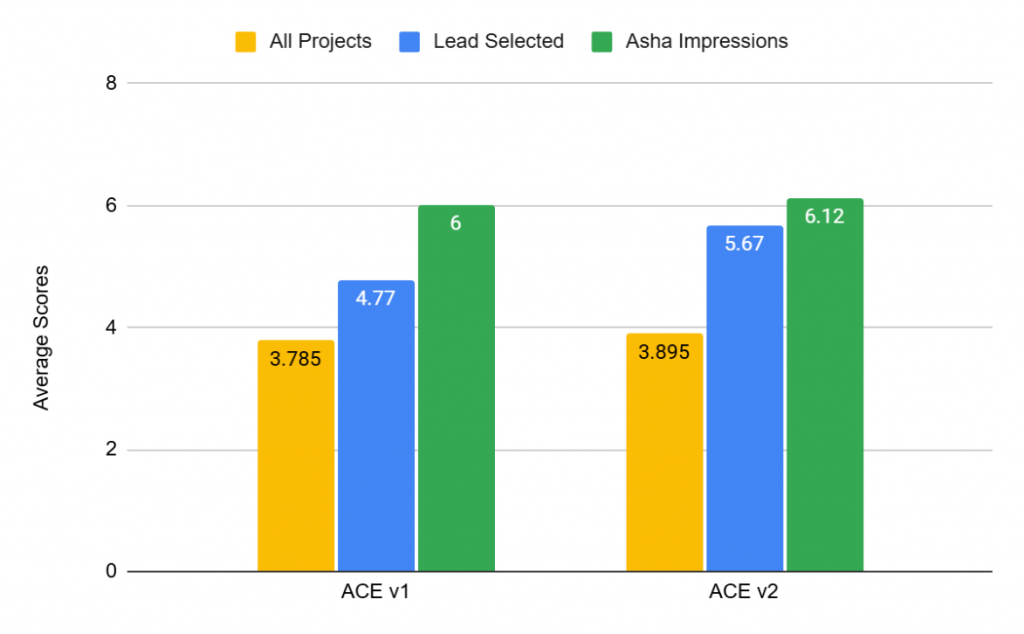
As we would expect, the projects that were selected by the lead teachers to be reviewed for the ACE Impressions and the projects which were finally selected for Asha Impressions were even better as can be seen in the graph below. With the experience gained by one cohort of teachers, the second cohort did even better as can also be seen.
Quality of the Best Projects
As mentioned earlier, we do not evaluate the program by just how the best teams do. But still, it makes us proud to see what can be achieved by the students with a program like ACE.
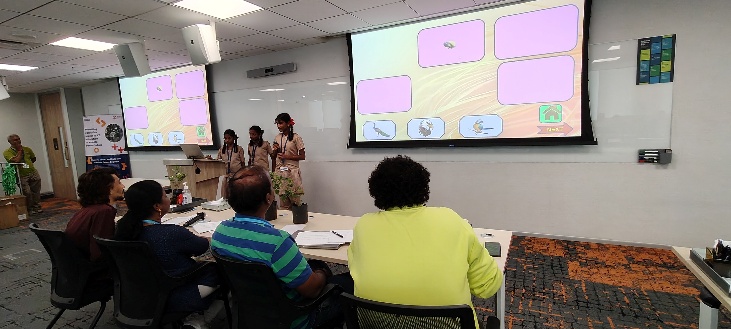
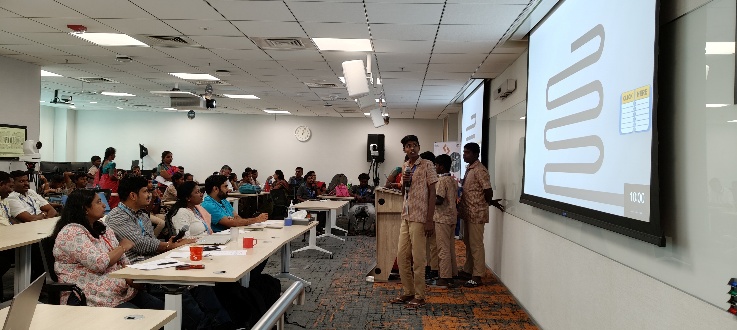
Here are some testimonials about the projects at the ACE Impressions events.
Mrs. Joan Mary, ACE Impressions V1 and V2 judge – It was my privilege to be a panel member for the presentations delivered by students from various schools. I was impressed with the confidence and energy each team brought with them. Most of the teams were able to answer the technical, content related questions which shows their enthusiasm, efforts and time spent to learn and create the presentations in a creative way. I thoroughly enjoyed the whole event by learning through the innovative thinking of these young minds. Kudos to ASHA team for creating such a positive impact in future generation!
Mr. Bala Vijay, ACE Impressions V1 judge – First of all I would like to thank my leadership and Asha for giving me an opportunity to be a judge for these amazing 17 projects that got shortlisted from about 250 projects originally submitted. I thoroughly enjoyed the presentations, the ideas and thoughts behind each of those projects. One thing I liked about these was that the students presented these projects with more joy and passion and not with fear. This clearly shows their readiness and depth of knowledge in the content and the technicalities of getting it done over the tool, in this case ppt. Kudos to the teachers and Asha who were the root that held this whole tree of event and I am sure these students would emerge with flying colours as was their presentation. And I was glad to witness the Corporate Social Responsibility that Amazon as a company holds. All the best and keep up the great work!!
This is my first ever event with Asha for education and this has broadened my idea how Amazon is supporting these kids under the ACE Impression program. It was such honor and pleasure to be part of the judging panel witnessing every single presentation curated by those young minds and enjoying their unique way of interacting with audience. Arun S, ACE Impressions 2 judge- As a judge for the Asha Impressions ACE program presentations, I was truly inspired by the remarkable talent and determination shown by the government school students. Despite limited resources, these young learners from 5th to 8th standard demonstrated impressive mastery of Open Office tools, presenting their work with confidence and enthusiasm.
Their innovative approaches and creative presentations proved that with proper guidance, these students can achieve outstanding results. The collaborative effort between Asha Foundation, Amazon volunteers, and Teachers created an environment where these young talents could truly shine. This experience highlighted the impact of corporate-NGO partnerships in bridging the digital divide and creating meaningful educational opportunities for underprivileged students. The students’ pride and enthusiasm made this volunteering experience truly memorable.
Success of the Program
The Asha Computer Education or ACE has been a tremendous success. We have evaluated it through various outcome measurements, some of which were detailed above, and it has done very well by every measure. Here are some of the aspects of this.
Curriculum and its Implementation
The first year curriculum needed to be reduced by a few lessons for ACE v2 because the program started only in August of 2024. In a full academic year, the curriculum and the list of lessons was adequately paced to be completed without any problems. See the progress of our curriculum for the ACE v2 Digital Literacy batch last year and the programming batches this year above in the section on Curriculum Tracker.
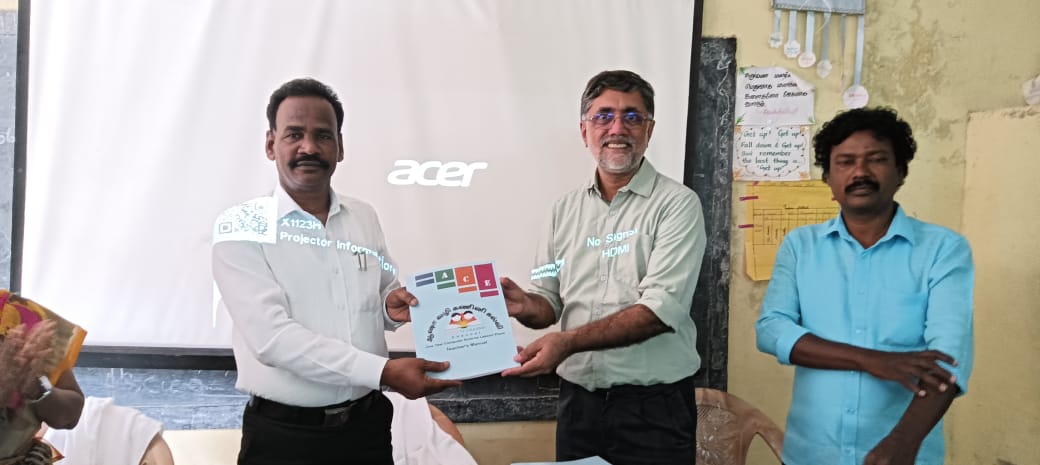
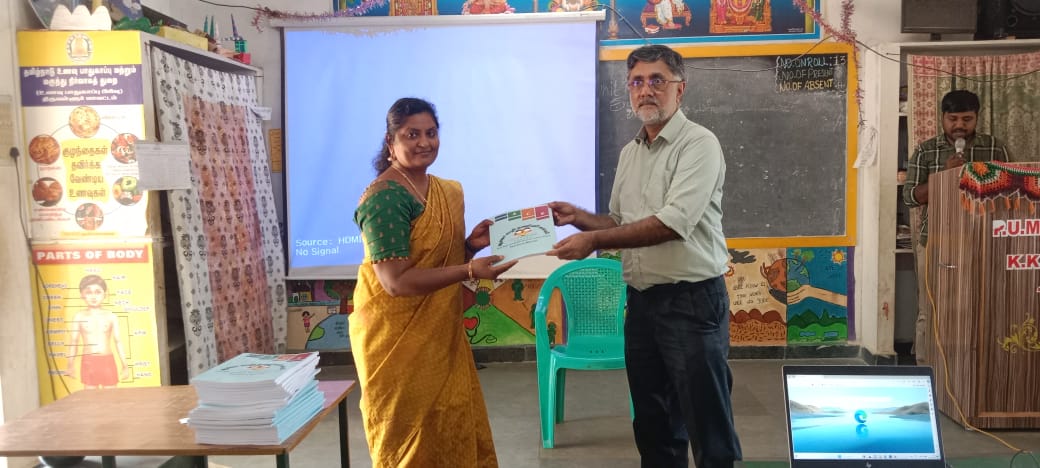
All the lessons in our lesson plan were structured as a set of exercises in line with our “Learn by Doing” pedagogy. There were no lessons that taught the students that the father of computer science is Charles Babbage or ask them to write down an memorise all the keyboard shortcuts in text document. Teachers who had already been teaching computer science sometimes had the tendency to revert to their old style. But teachers who were themselves learning CS for the first time, took to this like fish to water.
Teacher training methodology
This has been one of the biggest reasons for the poor performance of majority of the government programs. We employed a different model. Our teacher training was guided by the following approaches.
- “Teacher as a lead Learner”: This works well where the teacher is not an expert in the subject under question. Here the teacher is taught the lessons only a little before they teach it to the students. This also has the side-effect of a much more interactive classroom and demands a certain humility from the teacher who acknowledges that the children may also know more than them in some areas. This was a risk. Will the teacher adapt to this methodology? We found to our great satisfaction that they very easily adapted to this methodology. Some of the teachers who already knew computer science and have been teaching computer science struggled a little.
- Frequent training or Immediacy of training: We had one training session every month where the teachers learnt how to teach the next 4 or 5 lessons. Having the training closer to the actual use of the training ensures much better teaching, better conformance to the pedagogy etc.
-
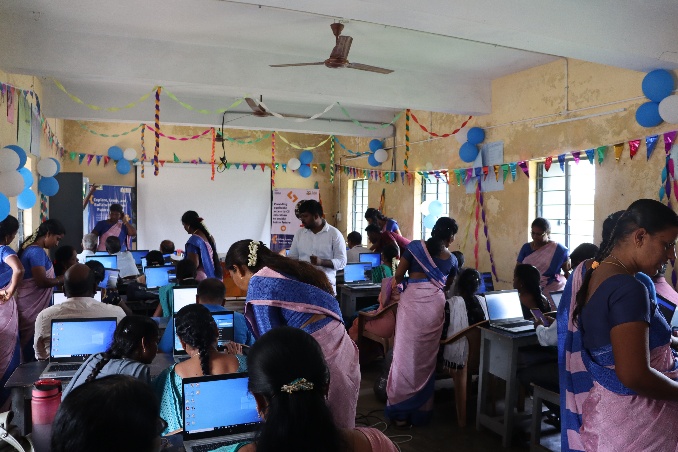
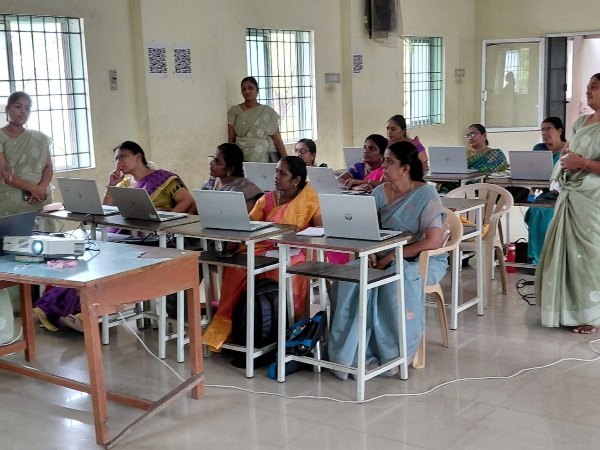
- Hand-holding at the point of delivery. Our trainers visited the schools once a month to observe and assist a class. In addition, they were available always for any doubts the teachers may have or problems they have with the infrastructure etc. Also, if a teacher missed a training session, our trainers on their next visit to the school, spent the time with the teachers to train them. This support visits also made us as an organization much more intimately aware of all the challenges the teachers were facing at the school like teacher schedule problems, computer lab scheduling problems, local issues with the community and the school etc.
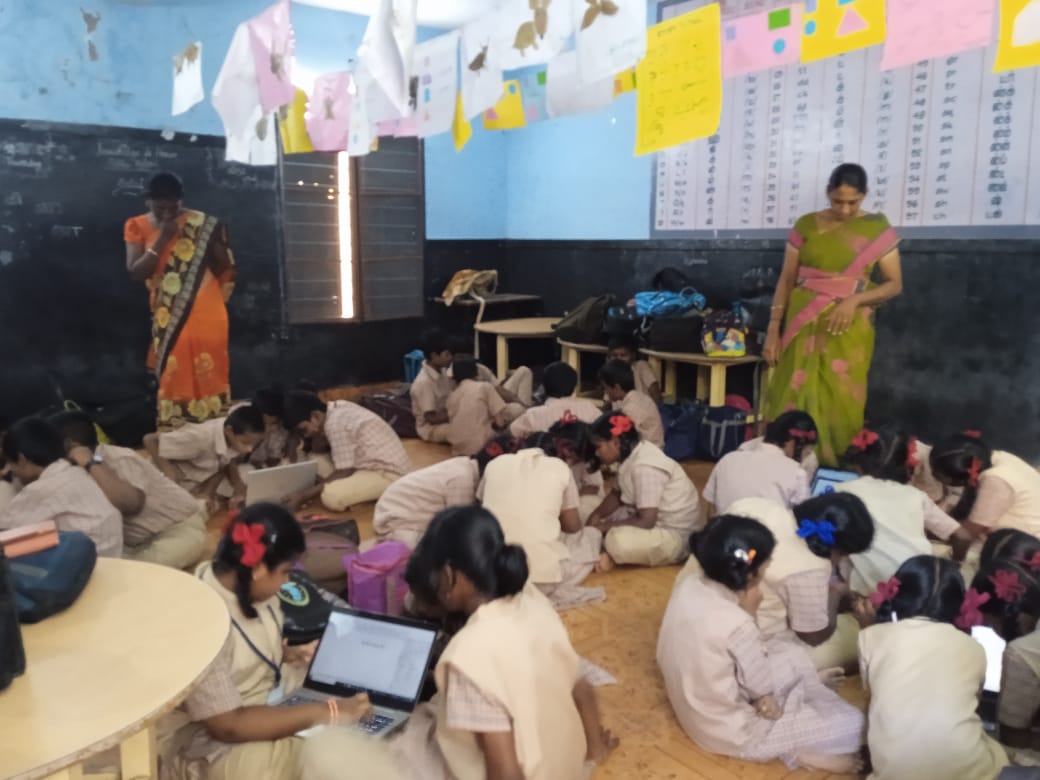
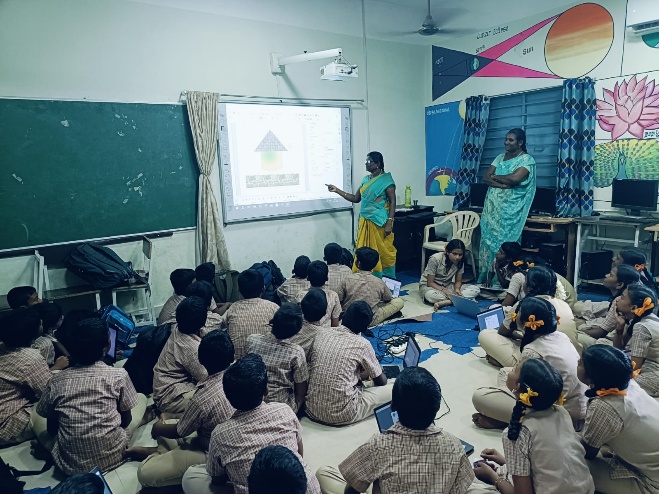
All of these together have been responsible for all the teachers completing the curriculum and excellent performance from the students as well.
Processes for tracking output and outcome
As explained earlier, we implemented a process for output tracking which provided good information about the work done by the teachers and the progress of various schools in the implementation of the curriculum. It also yielded information about how our program was working in terms of support visits etc. Infrastructure tracking was also strengthened over the year and we have been able to manage our decisions regarding service of computers etc. better through this.
The measuring of the average quality of the projects was done for the first time in the ACE program by our lead teachers. The assessment tracking and conducting of the baseline and endline standardized assessment was started in our RTC program and was implemented in ACE as well.
Completion of the 1st year program.
The extended first year for ACE v1 as well as the shrunk first year for ACE v2 got over by the end of the 2024-25 academic year. When we started ACE v1, we were hoping that 80% of the schools stay on to complete the program. Instead, 100% of the schools completed the program. Especially in the case of the ACE v2, the schools didn’t have the time to complete the projects. They continued to come to the school for two weeks after the annual exams, during holidays, to complete and deliver the projects. We were ourselves overwhelmed by the dedication and enthusiasm shown by these teachers. I visited some of these schools in early May to see their work in person. It was inspiring!
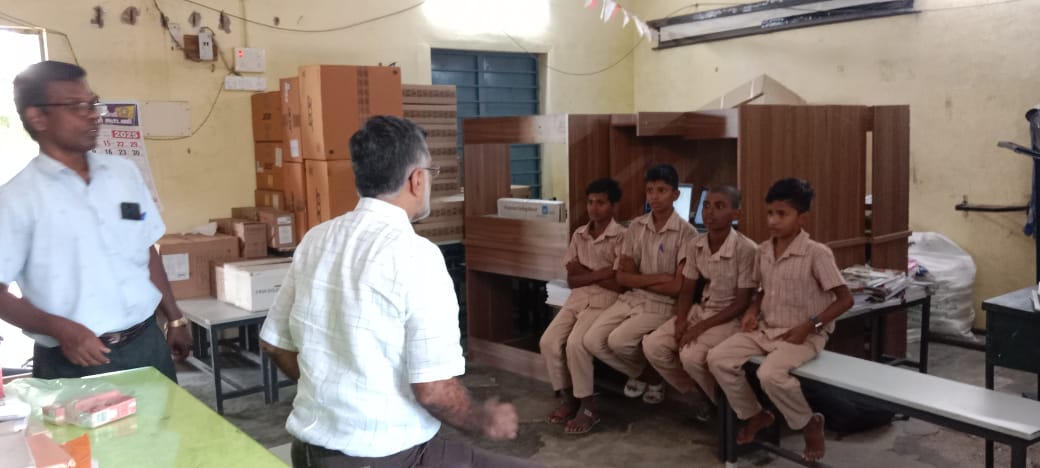
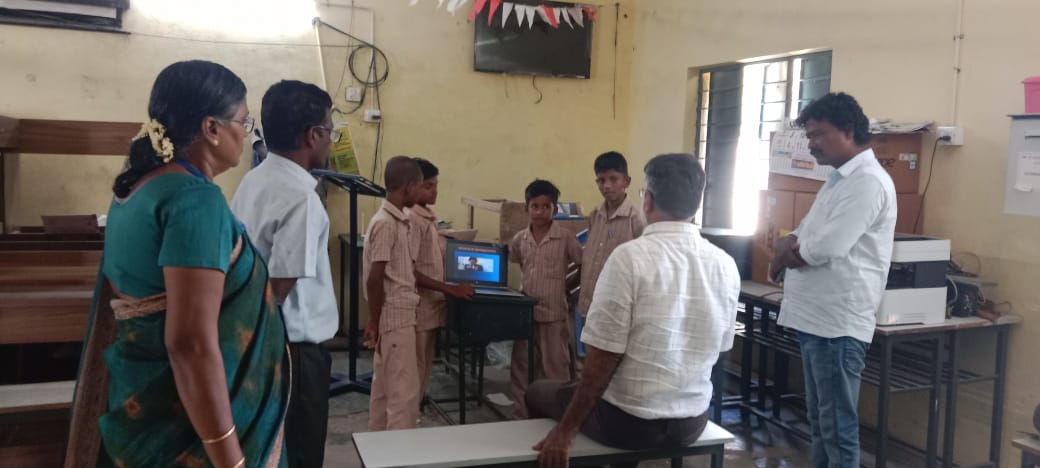
Within each school almost all the students participated in the project work. The assessment was not perfectly planned at our end and some 15% of the students missed our assessments. We will plan this better the next time.
Outcome measurements – Projects and Assessments
Projects were submitted by almost all the students in all the schools that participated in both the batches of ACE. As described in the section on “Project Work” above, all the projects met the basic quality criteria that we had set for them. The best projects submitted were excellent and, in many way, even excelled the projects submitted by Asha teacher lead teams in our other programs.
Our own course-end assessments revealed the learning levels of the children. The children mastered the things they need to do but not necessarily the language needed to express what they know.
In the standardized assessment based on the Northstar toolkit which is orthogonal to what we taught them, they showed significant improvements of 25% or so over a baseline which shows significant improvement in their digital literacy skills.
Continuation into the second year
As described in the “Schools, Teachers and Batches” section earlier, about 75% of the schools in ACE v1 and v2 continued into the second year of the program this 2025-26 academic year. Most of the dropouts occurred for reasons beyond the control. Of the 29 schools that dropped out, here is the breakup of the reasons.
| Teacher Transferred to another school | 16 |
| Spark program conflict | 4 |
| School covered by another Asha Program | 1 |
| Teacher Scheduling challenges | 4 |
| Teacher Not Interested | 4 |
Third party Impact Assessment
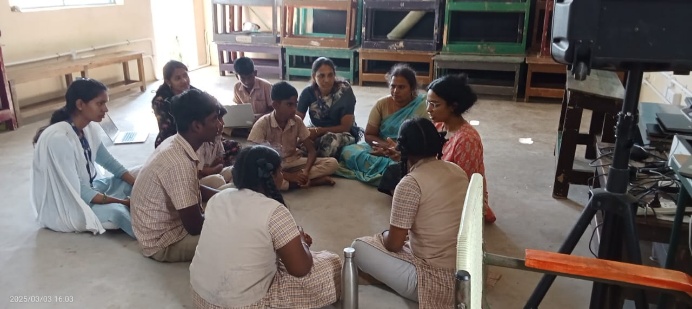
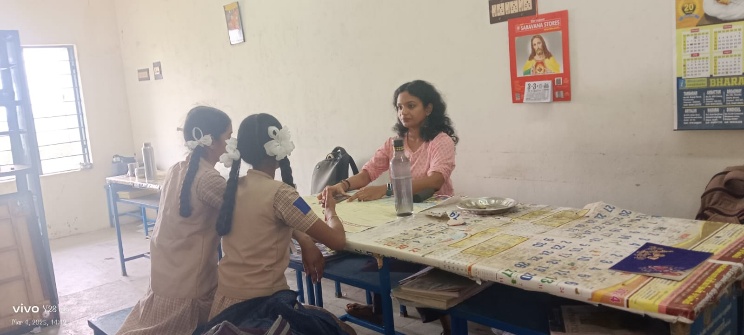
Asha Chennai engaged AuxoHub, an independent third-party consultancy specializing in evaluation for the social sector to study our ACE program. The study revealed how the program is reshaping rural classrooms through technology. AuxoHub conducted an independent impact assessment study of the ACE program between Jan to March, 2025 covering 30 government school teachers, 5 Asha trainers, 10 school administrators, 40 students and 10 parents. The wide-ranging study looked at the impact on the teachers own learning and teaching of CS, the students learning, the impact on their learning of other subjects, the changing perceptions in the community etc. You may read the complete report here. The impact of the ACE program has been tremendous in all these areas and more!
ACE Program in 2025-26
Both the batches of the ACE program have moved into the 2025-26 academic year. 67 of the schools moved to do programming. We have over the last year, been recognized as a regional partner of Code.org and are in many ways working closely with them. Therefore, we decided to try Code.org’s CSF Express course on a subset of these schools. In addition to these another 46 schools got added in the v3 batch of ACE. Currently the breakup looks as follows,
Digital Literacy or 1st year curriculum: 46 new schools plus 12 continuing schools = 56 schools.
Programming with Asha or Scratch based programming (2nd year curriculum): 42 schools.
Programming with CSF Express course (2nd year curriculum): 25 schools.
This gives us a good opportunity to evaluate and improve our own programming curriculum against a world standard! The structure in terms of approx. 30 hours of instructions followed by 10 hours of project work and finally the assessments and Asha Impressions are all continuing for all the three groups.
Spark and ACE
A big challenge and opportunity for Asha Chennai’s CS programs and in particular ACE is the introduction of the Spark curriculum by the TN government. It was unfortunate that Asha couldn’t be involved with the committee that framed the curriculum and the implementation plan. We are seeing the roll out of Spark in some of the schools we ourselves support. At the ACE schools the situation currently is as follows.
- None of the schools have pulled out of the ACE program because of this which is another indicator of how our program is perceived by the schools.
- Through them we are learning how the Spark program is being implemented.
- The teachers are asking us to train them in Spark the way we have trained them in ACE. We are yet to take a formal decision regarding this.
We are seeing several problems in the implementation of Spark.
Curriculum as a textbook instead of a set of learning Objectives:
In India most boards for all their subjects publish a textbook which contains within it the curriculum meant to be taught. Occasionally separate teacher’s manuals may also be published (which is not there for Spark). This poses several problems. It forces a style of pedagogy for the learning objectives which cannot be altered. It also pushes the teachers to frame their assessments based on the textbook instead of based on the learning objectives. Even though Asha has a better way to achieve the same learning objectives, we will not be able to implement our curriculum.
Spiral or Graded curriculum instead of a set of distinct courses:
The same topics, in this case Digital Literacy, online tools, AI and coding are there every year instead of going deep in say Digital Literacy the first year, coding the second year, AI the third year and so on. The first model is correctly practiced in subjects like Maths where it makes sense as there are a large number of basic skills that the student needs to acquire. But in a subject like CS, it is better to be intensive in one area. As we have been finding out, it not as through children forget Digital Literacy when learning coding or AI. The DL learning anyway gets reinforces even while coding and similarly coding is reinforced when doing AI and so on.
Extensive vs Intensive Curriculum:
One of the things we have been following as an axiom is that tools will keep evolving and therefore rather that teach a lot of tools, provide intensive learning through project work which makes it easier for them to learn new tools they have not encountered. However, Spark curriculum introduces the children to a wide array of tools and provides little space for creativity or critical thinking. Many of the tools they have used are very good like Geogebra for teaching Maths, PhET for teaching Science etc. These are vast tools and in our Sprint program we have been finding how difficult these tools are to master. Having 10 or more new tools every year make the teachers and students task impossible! Simple, small set of tools which they use thoroughly will be easier to implement and they will also end us learning more about Computer Science at large. Further many of these tools should be moved to the Maths and Science curriculum instead of be part of the Spark curriculum.
Full rollout instead of a year-wise rollout:
They have rolled out all the year programs right in the beginning. It would be better to start all classes 6 to 9 with 6th std textbook and next year move classes 7 to 9 to the 7th std textbook and so on. How will children learn robotics with Python in class 9 without learning basic coding in classes 6 to 8. Does it make sense to learn Spreadsheet when they haven’t even done basic typing and formatting (bold, italics, font colour/size/style etc.) in a text document? This also places enormous load on the teacher to master all the four years’ curriculum within a short span of time.
Teacher Training
They gave 2 days of training for the teachers (most of whom are new to computer science just like our ACE teachers were) and they were expected to start implementing the program which did not happen at all. The education department also seems to deploying some trainers to assist the teachers in their difficulties. It is to be seen how this works.
Output and Outcome Tracking
This ultimately is where most of the government education initiatives fail. The teachers will be asked to report voluminous data which doesn’t translate into anything tangible for them. There will be no proper verification of the data and therefore the teachers will start resorting to just fudging the data. This can be seen in program after program. Finally, the assessment will be based on the textbook and implemented without scrutiny but with penalty if the students do not perform which will result in even more fudging of data. Output reporting through EMIS for Spark also seems to be heading that way.
We feel at Asha Chennai, we can contribute a lot to Spark through our experience with ACE (and RTCs).
- Curriculum inputs – A course-based model that shows significant gain in knowledge in one area without it diminishing over the years. This will cover all the learning objectives of Spark in the same 4 years and achive a lot more.
- Teacher Training – Our “Teacher as a Lead Learner” model of training and pedagogy combined with support at the point of delivery has worked very well. Spark will do well to incorporate that.
- Project work – We have been focusing on projects as a key tool in the children’s learning and it has been very effective. Incentivising the teachers through the Impressions event and tracking of average project metrics is showing very good results.
- Output and Outcome tracking – Our reporting system which minimizes the work a teacher needs to do to report their work combined with lots of backend work to gain insights from that data and encouraging teachers to be honest in their reporting is also working well. Rigorous assessments based on LOs with little penalty for honest reporting is again the way to achieve progress.
Future of ACE
Where does that leave Asha and our various programs?
- ACE as a pilot can continue till Spark displaces it in various schools. Even in schools that are implementing Spark, they can also implement ACE if they so desire. We can support such schools in their Spark rollout as well.
- However, extending it to all classes and beyond 2 years will become impossible. We were hoping to eventually make it a proper 4-year curriculum with AI, Robotics and other advanced topics (like web development, media editing etc.). This will have to take a back seat. This is only partly because of Spark. Even now only 2 schools are implementing both the first year and second year curriculum. These two schools have part-time computer teachers. Other teachers do not have the bandwidth to do this on their own unless government gives proper instructions to school for this (like they are doing with Spark).
- Rolling out a 3rd and 4th year curriculum is also challenging without teachers developing significant expertise in Computer Science. With the existing crop of teachers, we are just about able to implement the 2nd year curriculum. Govt will also face this challenge with the 9th std curriculum.
- Our other programs like Sprint (working with primary and middle schools on all aspects of the school), RTCs (centres for teaching govt children advanced technology for free outside of the school), Explore (give basic exposure to CS/AI and other tech for students in classes 6 to 9) can all continue without much changes.
Asha will continue to reach out to the government to help them implement the Spark program in various ways and also hopefully influence its direction in the coming years. Our partnership with organisations like Code.org, Amazon, IIT Madras etc. will be very helpful in this regard.